
In the ring, boxing stance is everything. It determines your balance, power, and angles. There are two main stances in boxing: the orthodox stance and the southpaw stance. They are mirror images of each other, and each comes with its own set of strengths, weaknesses, and strategic considerations. Whether you’re new to boxing or just want to know about both styles, understanding the differences can help you appreciate strategy and technique on a deeper level. In this guide, we’ll break down the difference between the orthodox stance and southpaw stance, their advantages, techniques, and some of the famous fighters who used these stances. Regardless of which one you choose, the goal of any good fighter is to keep opponents on their toes.
What Is a Boxing Stance?
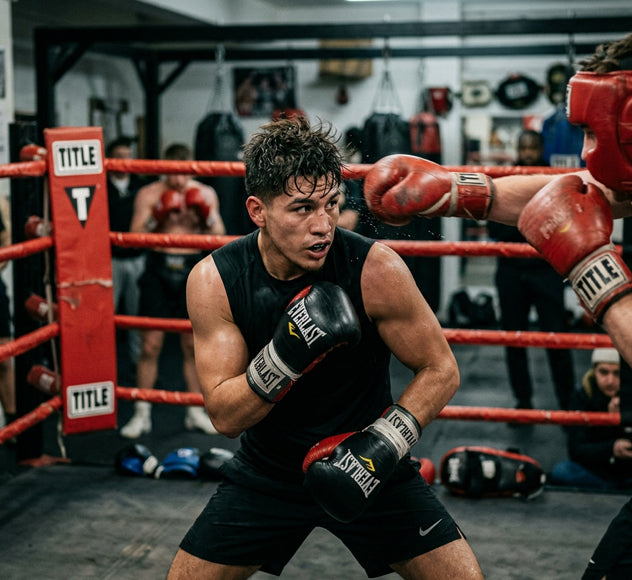
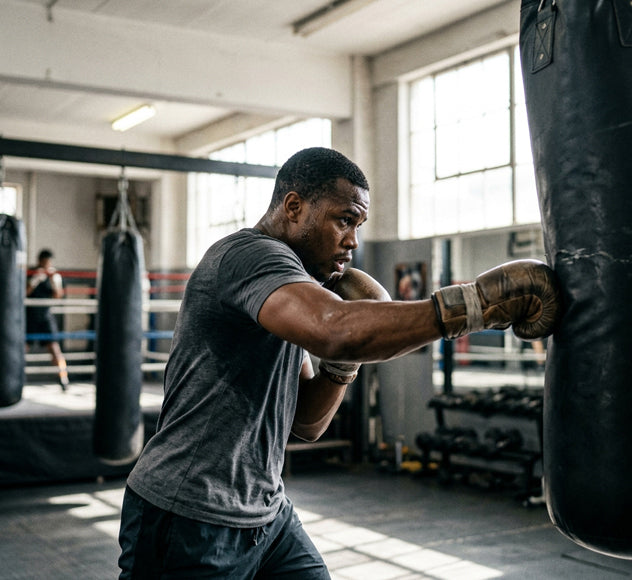
A boxing stance is how you position your feet and body during and between exchanges. In boxing, stance is everything. It determines your balance, power, and angles in the ring. There are two main stances in boxing: Orthodox and Southpaw. An orthodox boxer is naturally right-handed and holds the left hand and left leg in front, closer to the opponent. On the other hand, a southpaw boxer is naturally left-handed and leads with the right hand and right leg.
A proper boxing stance keeps your chin protected, your weight balanced over both feet, your knees slightly bent, and your hands in a guard position that covers your face while keeping your punches accessible.
What Is the Orthodox Stance?
The Orthodox stance is the most common in boxing and MMA. Most people are right-handed and naturally take this stance when getting in a fighting position. This stance is common because most people are right-handed, making orthodox the default starting point.
How to Set Up the Orthodox Stance
Stand with your left foot roughly shoulder-width ahead of your right foot. Point your left foot slightly inward toward your opponent. Bend both knees slightly and keep your weight balanced between both feet. Raise both hands to guard position with the left hand extended slightly and the right hand beside your chin. Keep your elbows close to protect your ribs and tuck your chin.
What Is the Southpaw Stance?
The southpaw stance is the mirror image of orthodox and commonly used by left-handed boxers. The southpaw stance positions the right foot forward with the left foot back. The right hand leads as the jab hand, and the left hand becomes the power cross in the rear. Southpaw fighters are less common, which often gives them an edge because opponents are not as used to facing them.
How to Set Up the Southpaw Stance
Stand with your right foot roughly shoulder-width ahead of your left foot. Point your right foot slightly inward toward your opponent. Bend both knees slightly and keep weight balanced across both feet. Right hand extends slightly as your lead jab hand; left hand sits beside your chin as your power hand. Keep elbows tight and chin tucked.
Key Differences Between Orthodox and Southpaw
|
Orthodox Stance |
Southpaw Stance |
|
|
Lead foot |
Left |
Right |
|
Rear foot |
Right |
Left |
|
Jab hand |
Left |
Right |
|
Power hand |
Right |
Left |
|
Prevalence |
Most common |
Approximately 10 to 15 percent of fighters |
|
Primary advantage |
Easy to learn, many training partners |
Tactical surprise, awkward angles for opponents |
Orthodox fighting style includes more traditional boxing patterns with straightforward jab-cross combinations. Southpaws, being rarer and having a reversed stance, bring an element of surprise to the ring. Orthodox fighters often struggle to adjust to the rhythm and timing of southpaw combinations.
Advantages and Disadvantages of Each Stance
Orthodox Stance
Advantages
-
Natural starting point for right-handed fighters.
-
Easier to find sparring partners who share the same stance.
-
Most boxing instruction is geared toward this stance.
-
Strong rear-hand strikes, like the cross.
-
Solid, balanced defense.
Disadvantages
-
Predictable to experienced fighters who have faced many orthodox opponents
-
The right side of the body can be exposed in an open stance matchup against a southpaw.
-
Less tactical surprise compared to the southpaw position.
Southpaw Stance
Advantages
Southpaw boxing is often considered a secret weapon as most fighters are not as familiar with this positioning.
-
Less common, so harder for opponents to prepare for.
-
Opens up angles that orthodox fighters aren’t used to.
-
Effective for counter-punching.
Disadvantages
-
Fewer southpaw sparring partners makes developing timing and rhythm harder.
-
While the stance is quick and creates unique angles, the lead right jab lacks the knockout power that the orthodox fighter's rear right cross carries.
-
Requires additional work to find coaching and training resources specifically tailored to southpaw boxing techniques.
Orthodox vs Southpaw: Footwork and Angles
When an orthodox fighter faces a southpaw, the dynamic of the fight changes fundamentally. This is called the open stance matchup, and it creates unique tactical considerations for both fighters.
The Lead Foot Battle
Orthodox fighters often target the southpaw's open right side while southpaws aim for the orthodox fighter's open left. The lead foot positioning becomes the central tactical chess match. Both fighters are trying to gain outside lead foot dominance to line up their power punches while limiting the opponent's angles.
Circling Direction
Orthodox fighters circle left to maintain distance and control the jab. Southpaw footwork, conversely, often involves circling right to set up the left cross and control the center of the ring. The direction of movement is crucial in controlling the fight.
Defensive Adjustments
Both fighters must adapt their standard defensive patterns in an open stance matchup. Orthodox fighters must be particularly aware of the southpaw's left cross, which comes from an angle their standard right-hand guard does not naturally cover. Southpaws must protect against the orthodox right hand arriving from a similarly unexpected angle.
Famous Orthodox and Southpaw Fighters
Elite Orthodox Fighters
Floyd Mayweather Jr. built the most technically refined defensive boxing stance in heavyweight and welterweight history from the orthodox position. Muhammad Ali, Sugar Ray Leonard, and Canelo Alvarez all demonstrated what the orthodox stance looks like when taken to its highest expression.
Elite Southpaw Fighters
Southpaw boxers are rare, and it is easy to name the most successful ones. Manny Pacquiao, Marvin Hagler, Joe Frazier, and Vasyl Lomachenko all built elite careers from the southpaw position. In the past, fighters often tried to avoid facing a southpaw due to the challenges they posed, which is why many top champions have been left-handed.
These fighters show how much boxing technique can develop within a single stance when the fundamentals are mastered completely.
How to Choose the Right Boxing Stance
Follow Your Dominant Hand
Orthodox boxers lead with the left hand and left foot while southpaw boxers lead with the right hand and right foot. For most beginners, the choice is straightforward. If you are right-handed, start with orthodox. If you are left-handed, start with southpaw.
Trust Your Coach's Assessment
An experienced coach can observe how you move naturally and assess which stance suits your body mechanics, footwork tendencies, and punching patterns. This assessment is more reliable than self-assessment alone in the early stages of training.
Do Not Switch Prematurely
Master one stance completely before experimenting with the other. Some advanced fighters train both stances and switch mid-fight to create new angles and confuse opponents. This is extremely difficult to do well and is generally not recommended for beginners.
Understanding how your stance connects to your overall approach is part of developing personal boxing styles. Your stance is the foundation, and the style you build on top of it reflects your strengths, your physical attributes, and your tactical instincts.
Training Tips for Both Stances
Build Your Foundation on the Bag
Spend the first weeks of your training drilling your stance on the punching bag. Focus on foot position, weight distribution, and guard position before adding movement or combinations. A stable, balanced boxing stance is what all other boxing techniques are built upon.
Protective gear, including hand wraps, a mouthguard, and headgear, protects you during the live work where stance genuinely gets tested under pressure. Drilling on the bag teaches the mechanics. Sparring teaches you whether they hold under stress.
Work Your Combinations From Your Stance
Once your stance feels natural, begin developing your combination patterns. The combinations available to you differ between orthodox and southpaw because the lead and rear hands are reversed. Boxing combinations built specifically around your stance create the offensive fluency that makes your boxing stance a genuine weapon rather than just a starting position.
Protect Your Hands in Every Session
Hand wraps are essential regardless of which boxing stance you use. They protect your wrists and knuckles during the high-repetition drilling that ingrains stance mechanics. Never skip wraps in any session where your hands are making contact with a bag, pads, or a sparring partner.
Study What Your Stance Opens Up
Your boxing stance determines which punches carry the most power and which targets become most accessible. Understanding what knockout punches in boxing are most naturally available from your specific stance helps you build a game plan around genuine strengths rather than generic combination patterns.
Wearing the right boxing clothes during training sessions also supports performance. Lightweight, breathable shorts and tops that allow full hip rotation and arm movement are worth investing in from your first session, because your stance and movement quality are directly affected by how freely you can move.
Orthodox vs Southpaw at a Glance
|
Category |
Orthodox |
Southpaw |
|
Best for |
Right-handed fighters |
Left-handed fighters |
|
Power punch |
Right cross |
Left cross |
|
Tactical edge |
Familiarity and volume |
Surprise and awkward angles |
|
Open stance matchup |
Vulnerable on right side |
Vulnerable on left side |
|
Famous example |
Floyd Mayweather Jr. |
Manny Pacquiao |
|
Training partners |
Easy to find |
Less common |
Final Thought
Your boxing stance is the foundation of everything you do in the ring. Whether you fight from the orthodox stance or the southpaw stance, the principles for the effective stance will be the same: proper distribution of weight, protected chin, active guard, and the ability to generate power and move in any direction without losing your base.
If you’re ready to step into the ring with gear made to refine your skills, check out Sting Sports. Whether you are drilling your stance for the first time or refining the mechanics behind a southpaw left cross, we are dedicated to empowering fighters in every stance.
FAQs
Q1. What is the difference between the orthodox and southpaw stances?
The orthodox stance places the left foot forward with the right hand as the power punch. The southpaw stance is the mirror image of this: right foot forward with the left hand as the power punch. Orthodox is mainly used by right-handed fighters and southpaw by left-handed fighters.
Q2. Can a right-handed person fight southpaw?
Yes. Although it is uncommon, some right-handed fighters learn the southpaw stance for its tactical advantages, especially against their orthodox opponents. This stance can offer strategic benefits, such as surprising opponents and leveraging the dominant hand for powerful strikes.
Q3. Is It Good to Switch Between Southpaw and Orthodox?
During a fight, advanced fighters called switch-hitters can change between orthodox and southpaw stances during a fight. This creates new angles and confuses opponents. This requires mastery of both stances and is not recommended for beginners.
Q4. Why is southpaw considered an advantage?
Southpaw boxing catches orthodox opponents off guard. They will not be able to anticipate shots as well, and the reversed angles create problems for standard defensive patterns trained primarily against orthodox opponents.
Q5. What boxing stance do most professional fighters use?
The orthodox stance is more commonly used amongst professional boxers since most individuals are right-handed. There are around 10 to 15 percent of professional boxing population that represents the southpaw stance. Their rarity gives them a tactical advantage.