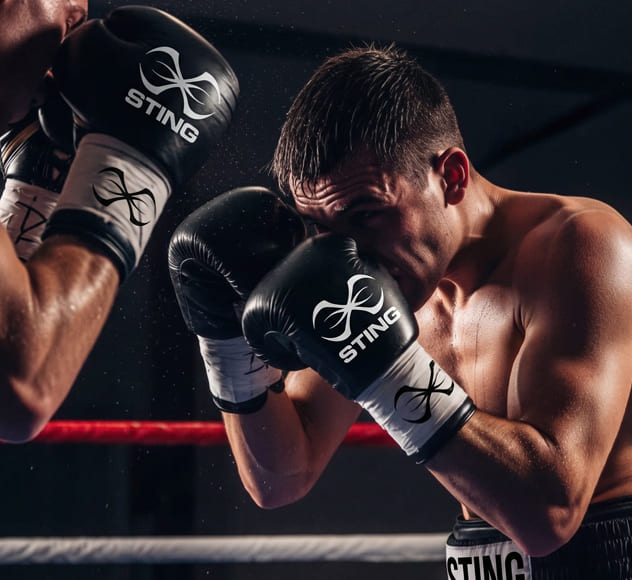

Ever seen two boxers step into the ring and know straightaway they will fight in completely different styles? There's a reason for that. Boxing styles form the bedrock of every fighting strategy devised through training, natural talent, and physical capability. Since the days of bare-knuckle boxing in the 1800s, boxers have been known to favor certain fighting styles based on their physique and mental makeup. Research proves that boxers who practice a particular style enhance their efficiency by as much as 30%. Learning about boxing styles isn't just for the benefit of spectators but for all boxers.
What Are the Main Types of Boxing Styles?
There are four distinct styles of boxers, including the out-boxer, pressure fighter, slugger, and swarmer. These styles carry different levels of energy to the ring and require different physical and mental attributes to be successful. In today’s modern era of coaching, coaches in North America and worldwide develop their entire training program based on these styles. If you are curious about how fighters from different countries approach the ring, the differences between American and Mexican boxing offer a fascinating lens into how culture shapes fighting identity.
What Is a Pressure Fighter in Boxing?
The pressure fighter in boxing is quite straightforward from its name. He is an aggressive boxer who keeps constant, relentless pressure on his opponent throughout the bout. It is aimed at breaking his opponent both physically and psychologically through relentless attacks.
Characteristics:
-
Continuous advancement towards the opponent
-
Large number of punches were thrown
-
Effective body work
-
Good physical fitness and endurance
Famous pressure fighters have been Julio César Chávez and the more contemporary Gennady Golovkin, whose 2026 legacy continues to serve as a benchmark for the strategy. Pressure fighting is directly linked to Mexican style boxing, which has historically prioritized forward movement, relentless body punching, and mental toughness over retreat. Pressure fighters tend to thrive in the later rounds when their stamina outlasts a fatigued opponent.
What Is an Out-Boxer?
The out-boxer, known also as a pure boxer or technical boxer, boxes opponents out using excellent footwork and distance control along with precise jabbing actions.
Main Features:
-
Uses long-range techniques
-
Uses the precision jab
-
Good footwork and mobility
-
High defensive sense
-
Boxing while on the back foot
Two boxers who personify the out-boxer style include Muhammad Ali and Floyd Mayweather Jr. The out-boxer plays the game of chess inside the ring. Everything he does in the ring is done for calculation and point accumulation. Your knowledge of the proper stance is important here. Many out-boxers use an orthodox stance to maximize reach and range, which you can explore in more depth in this guide on southpaw vs orthodox boxing.
What Is a Slugger in Boxing?
A slugger values his power over skill. He knows that he will have to endure a hit, so he can deliver a crushing blow himself. He might not be the most skilled boxer, but his power will make all the difference with just one blow.
Characteristics:
-
Powerful punches
-
Aggressive stance
-
Wide stance with shorter distance
-
Slow yet explosive movements
Famous slugging boxers include George Foreman and Deontay Wilder. A slugger is no risk-taker; he knows the odds and knows that it will only take him one blow to win a fight in any round. This fighting style suits boxers with a good chin and guard.
What Is a Swarmer in Boxing?
Swarmer is a style of fighting that is known by the name of inside fighting and can be described as a blend of pressure fighting and slugger. The swarmer enters the opponent's defenses quickly and overwhelms them using combinations from an inside position with lots of head movement to defend against any counterattack.
Characteristics:
-
In-fighting attacks
-
Short rapid combinations
-
Heavy movement of the head and body
-
Fast-paced in-fighting
One of the best examples of the swarmer fighter was Mike Tyson, who was dominating his opponents in the swarmer fashion during his prime years. By the year 2026, there were several promising young prospects fighting in the light heavyweight division employing the swarmer style with elements of modern footwork.
Outboxer vs Slugger: Key Differences
The outboxer vs slugger matchup is one of the most fascinating stylistic clashes in boxing. Here is how they compare directly:
|
Factor |
Out-Boxer |
Slugger |
|
Range |
Long range |
Short to mid-range |
|
Punching style |
Quick combinations |
Single powerful shots |
|
Defense |
Movement and distance |
Chin and guard |
|
Goal |
Outpoint over 12 rounds |
Knock out before then |
|
Example |
Floyd Mayweather Jr. |
Deontay Wilder |
When an out-boxer faces a slugger, the out-boxer tries to make it a distance fight while the slugger tries to close the gap. The fighter who dictates the range usually controls the outcome. This stylistic tension is part of what makes the most unique boxing styles in history so compelling to study.
How to Find Your Boxing Style
Finding your natural boxing style takes time, honest self-assessment, and quality coaching. Here is a simple framework to guide you:
Step 1: Assess Your Physical Build. Taller fighters with longer reach tend to suit the out-boxer style. Stocky, compact fighters often thrive as pressure fighters or swarmers.
Step 2: Identify Your Natural Instincts. In sparring, do you naturally move forward or backward? Do you prefer to land one big shot or fire off combinations?
Step 3: Test Multiple Styles in Training. Spend at least four to six weeks drilling each style separately before committing. Use heavy bag sessions, pad work, and sparring to test what feels most natural.
Step 4: Get Coach Feedback. No fighter fully sees their own habits. A qualified coach will identify patterns you cannot see in yourself.
Step 5: Gear Up for Your Style. Every boxing style places different demands on your equipment. A pressure fighter needs durable gloves that handle high-volume training. An out-boxer needs gloves with good knuckle protection for sharp jab work. Sting Sports offers a full range of boxing gloves and training gear at stingsports.ca designed to support every fighter at every level.
Conclusion
One of the best ways to make yourself a better boxer is to understand your style of fighting. No matter if you consider yourself to be a pressure fighter, an out-fighter, a slugger, or a swarmer, you will always build upon your style as you develop your skill. It is important to remember that the great boxers in the year 2026 will be the boxers who know themselves inside the ring.
Now that boxing styles have been broken down for you, the next step is yours. Visit Sting Sports to gear up, train harder, and fight with purpose.
FAQs
Q1: What are the main boxing styles explained for beginners?
There are four main boxing styles that are usually taught to newcomers, which include out-boxer, pressure fighter, slugger, and swarmer. These four boxing styles match different types of bodies and tendencies of boxers. For beginners, the out-boxer style is commonly recommended to be adopted since it will help them master footwork and defense initially.
Q2: What is a swarmer in boxing, and how is it different from a pressure fighter?
A boxer who is a swarmer uses speed and agility to get in close to his opponent while applying numerous combinations within a very short period of time. A pressure fighter uses constant movement, but he tends to fight in mid-range. A swarmer is an explosive boxer who uses more head movement than a pressure fighter.
Q3: How do I use the boxing styles explained concepts to find my own style?
To apply the concepts of boxing styles explained in practice, one should evaluate their physique and try all the mentioned styles during training sessions over several weeks. In order to make the process much easier, one will have to receive proper training and wear appropriate equipment.
Q4: Who are the best examples of each boxing style in 2026?
The out-boxer category can be exemplified by boxers such as Vasyl Lomachenko. The pressure fighters' archetype includes Julio César Chávez and Tim Tszyu. Sluggers can be traced back to George Foreman and Deontay Wilder. Swarming fighters such as Naoya Inoue combine the strengths of an inside fighter with a slugger.
Q5: Can a boxer use more than one style?
Yes. It is common for many high-level boxers to have a main style but include techniques from other styles as well. For instance, Canelo Álvarez combines aspects of pressure fighting and counter-fighting skills.