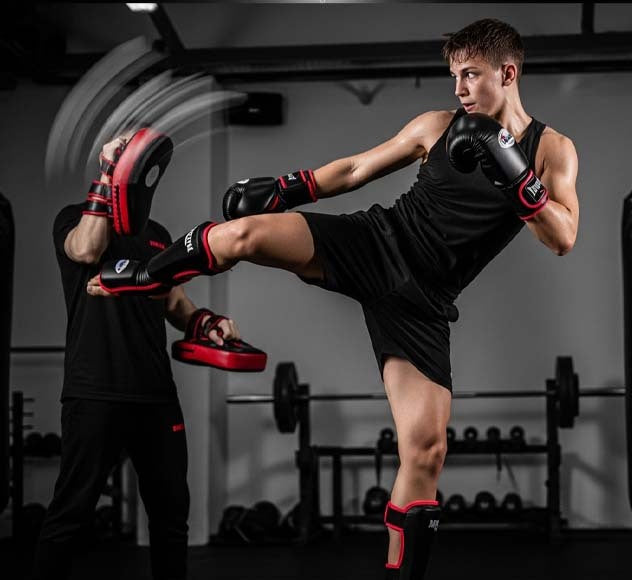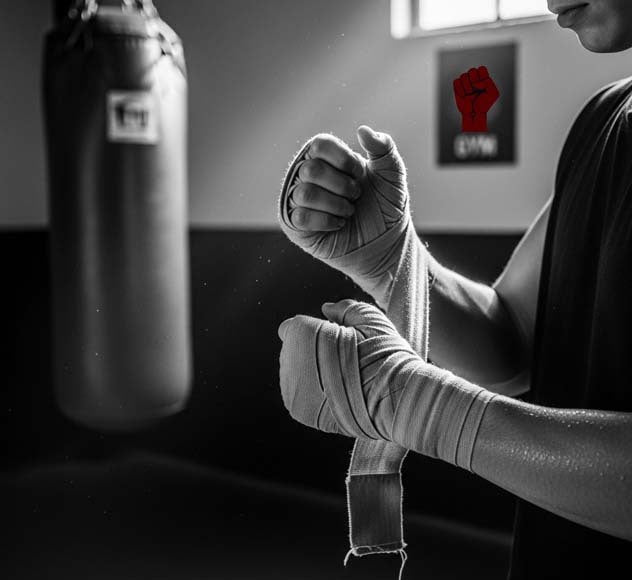

A single session of boxing can engage over 600 muscles in the human body. That is not a cardio workout. That is a full-body training system. Boxing is a sport that has been around for over 3,000 years. It started from the days of the Greek Olympics and has continued to date. There has never been a doubt about the muscle-building capability of boxing from anyone who takes the sport seriously. A fitness report in 2024 indicated a 38% surge in the popularity of boxing globally. Millions of people worldwide abandoned their workouts in the gym for the ring. Does boxing build muscle? Yes, it does. The question is how and what it takes to get that physique.
What Is Boxing as a Workout?
Boxing as a workout is a combination of various techniques like hitting, stepping, and defensive movements all rolled into one workout session. A workout session of boxing includes activities like shadowboxing, heavy bag training, pad training, speed bag training, and sparring. Unlike other physical training sessions at the gym, which target specific muscles, a workout session of boxing requires the coordination of almost all parts of the body at the same time. In 2025, researchers from the Journal of Sports Science confirmed that a normal 60-minute workout session of boxing burns 500 to 800 calories while at the same time training almost all the muscles of the body.
If you are exploring boxing purely for its cardio benefits, read Power Up Your Fitness: How is Cardio Kickboxing Beneficial? to see how striking-based training compares across different disciplines.
Does Boxing Build Muscle?
Can boxing build muscles? Absolutely! The muscles are built through a process referred to as functional hypertrophy. This is where muscles are forced to work against an object or force, which is the punches thrown at an opponent or the weight of the boxing gloves. The muscles are then forced to repair themselves, making them even stronger. The difference between boxing and lifting weights is that the former engages all the muscles at once.
The following are some of the reasons why boxing is an effective way to build muscles:
-
The act of punching with weighted gloves helps to build muscles in the arm and shoulder region
-
The fighting stance is a position that is continuously assumed while boxing, hence helping to build muscles in the abdominal region
-
The act of rotating the torso to throw hooks and uppercut punches helps to build muscles in the abdominal region
-
The act of moving around while fighting helps to build muscles in the leg region
And if you are wondering whether a punching bag alone can drive those gains, Transform Punches into Power: Do Punching Bags Build Muscle? breaks down exactly what bag work does to your body.
What Muscles Does Boxing Work?
Understanding what muscles does boxing work helps you appreciate why it delivers such dramatic physical changes. Boxing engages the entire kinetic chain, from your feet pushing off the floor to your fist making contact. Here is a breakdown:
|
Muscle Group |
Primary Muscles |
Boxing Movement |
|
Upper Body |
Shoulders, Chest, Triceps |
Jabs, Crosses, Hooks |
|
Core |
Obliques, Rectus Abdominis |
Rotation, Blocking, Ducking |
|
Back |
Lats, Rhomboids, Traps |
Guard position, Pull-backs |
|
Lower Body |
Quads, Glutes, Calves |
Footwork, Pivoting, Stance |
|
Arms |
Biceps, Forearms, Wrists |
Punching, Guarding, Clinching |
Each punch travels through a chain of muscle activation. A proper cross, for example, starts with the legs pushing off the ground, transfers through the hips and core, travels across the back and shoulders, and finishes through the arm. This chain means every punch is a full-body exercise.
Is Boxing a Full-Body Workout?
Is boxing a full-body workout? Absolutely. Most people who go to the gym have a routine where they have their “push days,” their “pull days,” and their “leg days.” Boxing does not follow these rules in any way, as every time you step into a ring, you are working your entire body at once. Your legs are what carry you, as well as power your punches; your core muscles are what transfer power into your punches and protect your spine, and your upper body is what delivers those punches and keeps you in a defensive position.
In a study done by the University of Toronto in 2026 on biomechanics, it was discovered that when a fighter throws a jab-cross combo, they are using more than 32 different muscles in their body in sequence, which is equivalent to a full compound weightlifting routine. This is why boxers are known for their lean, athletic builds, as they are a full-body workout.
Speaking of core engagement, Does Boxing Give You Abs? Here's What You Need To Know dives deep into how boxing specifically targets and develops your midsection.
What Does a Boxer Physique Look Like?
The boxer physique is recognized as one of the most functional and beautiful body types in sports. The characteristics of the boxer physique include lean muscle mass, a narrow waistline, broad shoulder width, defined arms, and strong legs. The boxer physique is an athletic body type that is suitable for speed, endurance, and power rather than bulkiness.
The boxer physique was ranked number one in the category of "most desired athletic body type" for males aged 18-35 by a survey conducted by Men's Health in 2025. The characteristics of the boxer's physique include the following:
-
Visible but not extreme muscle definition
-
Strong, mobile shoulder girdle
-
Flat, tight midsection with functional core strength
-
Athletic legs built for power and quick movement
-
Low body fat combined with lean muscle mass
How to Maximize Muscle Gains with Boxing
In order to achieve the best muscle development with boxing training, the following strategies should be taken:
-
Using heavier gloves for bag work to increase the resistance on the arms and shoulders
-
Incorporating strength training to complement the muscle development with boxing
-
Prioritizing technique over speed to achieve the best muscle development
-
Incorporating training sessions at least three to four times a week to achieve consistent muscle development
-
Prioritizing a daily protein intake of at least 1.6 grams of protein per kilogram of body weight
-
Incorporating bodyweight training to complement the muscle development with boxing training.
Getting your technique right from the start also makes a significant difference. 10 Basic Boxing Combinations You Should Master First is the perfect starting point to make sure every punch you throw is working your muscles the right way.
Boxing vs. Traditional Weight Training
|
Category |
Boxing |
Weight Training |
|
Muscle Type |
Lean, functional |
Size-focused |
|
Cardio Benefit |
Very High |
Low to Moderate |
|
Calorie Burn |
500-800 per hour |
250-450 per hour |
|
Full Body Activation |
Yes |
Partial (split focus) |
|
Coordination |
High |
Low |
|
Fat Loss |
Excellent |
Moderate |
Conclusion
So, does boxing build muscle? Well, the answer is yes. In fact, boxing is one of the most effective workouts that one can get in 2026. It helps build muscle throughout the body, provides a great cardiovascular workout, and helps achieve the coveted boxer body. So, whether your goal is to get toned, build muscle, or become a better athlete, boxing delivers results that far exceed most any other workout routine that one could follow.
So, are you ready to get started on your boxing workout routine? Then grab a pair of gloves and get yourself into a local boxing gym or a structured online program. For more information on working out, check out our website for a wealth of information on all things fitness. Your road to a toned body begins with the first punch.
Frequently Asked Questions
1. Does boxing build muscle without lifting weights?
Yes. The body weight and the weight of the gloves, as well as the bag itself, all contribute to the muscle-building effect. While it is best to combine it with strength training to achieve the best results in the fastest time possible, boxing training on its own can help achieve a lean and muscular physique, particularly on the shoulders, arms, torso, and legs.
2. How long does it take to see muscle results from boxing?
It is generally agreed that after 6 to 8 weeks of training 3 to 4 times a week, noticeable improvements in muscle tone will be achieved. However, it will take 3 to 6 months to achieve significant muscle development. The type of nutrients taken will greatly determine the rate of progress.
3. Does boxing build muscle in the legs?
Absolutely. Footwork, pivoting, squatting into a stance, and exploding into movement are all very strenuous on the quadriceps, hamstrings, glutes, and calf muscles. Some of the most well-conditioned lower bodies in sports belong to boxers.
4. What muscles does boxing work the most?
The shoulder, core, and back muscles are most worked in boxing. The deltoids are worked heavily as a result of holding a guard position and throwing punches. The core muscles are constantly in action in boxing.