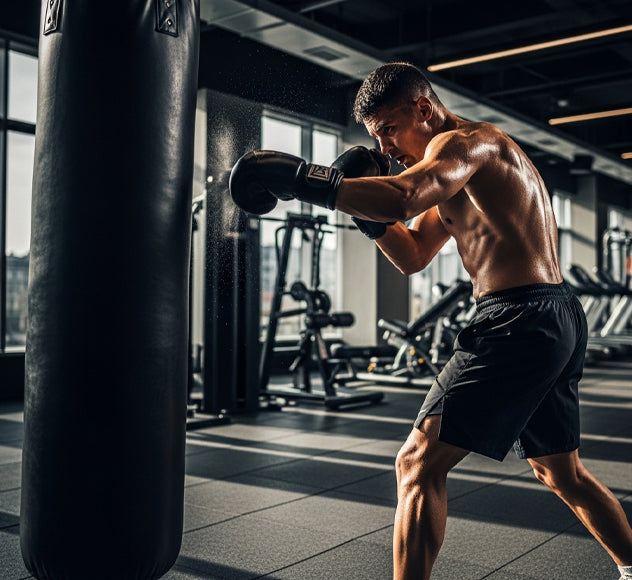

Muhammad Ali once said, "I hated every minute of training, but I said, don't quit. Suffer now and live the rest of your life as a champion." That spirit still pulls millions into the gym every year. According to Statista, 8.4 million people in the United States practiced boxing in 2023 alone. The sport burns up to 1,000 calories per hour, builds real strength, sharpens mental focus, and teaches discipline in a way most sports cannot match. If you are wondering how to start boxing, the good news is that the entry point is simpler than most people think. You do not need a boxing background or elite fitness. You need the right information, the right gear, and the willingness to show up. This guide covers everything a complete beginner needs to get started the right way, from footwork and fundamentals to gear, diet, and shoulder training.
Why People Start Boxing
People come to boxing from many different directions. Some want to get fit. Others want to learn self-defense. Many discover the mental benefits before they ever step into a gym.
Boxing works the entire body at once. Your legs drive every punch. Your core transfers the power. Your arms and shoulders deliver the strike. No other fitness activity builds full-body conditioning, coordination, and mental toughness in the same combination.
The mental side matters just as much. Boxing teaches you how to stay calm under pressure. It builds confidence in a way that gym machines simply cannot. You walk out of a session knowing you pushed through something difficult, and that feeling carries into every other area of life.
Whether your goal is fitness, competition, or stress relief, boxing delivers results fast. Most beginners notice improvements in stamina, coordination, and strength within the first four to six weeks of consistent training.
What to Expect in Your First Month of Boxing
Your first month will feel uncomfortable. That is completely normal.
Your body needs time to adapt to the movements. The stance feels awkward. The punches feel uncoordinated. You run out of breath faster than you expect. This is the foundation phase, and every boxer goes through it.
Week 1 to 2
Your coach introduces you to the basic stance, footwork, and the first two punches: the jab and the cross. Sessions focus more on technique than intensity. Your muscles will be sore, especially in the shoulders, core, and calves.
Week 3 to 4
You start combining punches into sequences. Your footwork improves. You begin working on the heavy bag with more confidence. Pad work with a coach starts to feel less chaotic. Your stamina picks up noticeably by the end of week four.
The key is consistency over intensity. Showing up three to four times per week produces far better results than occasional long sessions.
How to Start Boxing: The Fundamentals
How to start boxing correctly begins with three things: your stance, your guard, and your movement. Get these right, and everything else builds naturally on top of them.
The Boxing Stance
Stand with your feet shoulder-width apart. Point your lead foot forward and angle your rear foot slightly outward. Keep your weight evenly distributed across both feet. Your knees stay slightly bent at all times.
Right-handed fighters lead with their left side. Left-handed fighters, known as southpaws, lead with their right. Your lead hand sits about level with your chin. Your rear hand sits closer to your cheek. This is your guard.
Footwork
Boxing footwork is about staying balanced while moving. You step with the foot closest to the direction you are moving, then bring the other foot to match. You never cross your feet. Good footwork keeps you in range to punch and out of range to get hit.
Practice moving forward, backward, and side to side before you worry about punching. If your base is unsteady, your punches will be too.
The Four Basic Punches
Boxing builds from four fundamental strikes:
-
Jab: A quick, straight punch with your lead hand. It sets up every combination and controls distance.
-
Cross: A powerful straight punch with your rear hand. Your hips and core drive the power.
-
Hook: A punch that travels in a horizontal arc, targeting the side of the head or body.
-
Uppercut: An upward punch targeting the chin. You drive it from a slight knee bend, not just the arm.
Master the jab and cross before you add the hook and uppercut. Most beginners rush past the basics. The jab alone, thrown correctly and consistently, is enough to win rounds and keep an opponent off balance.
Essential Gear for Beginners
You do not need a full gear bag on your first day. You need the essentials. Skipping any of the following items increases your injury risk, no matter how light your training is.
Boxing Gloves
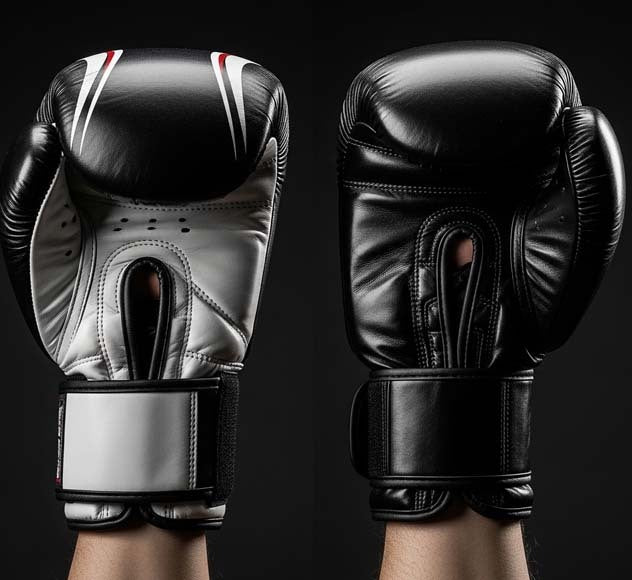
Your boxing gloves protect your knuckles, fingers, and wrists on every punch. For beginners, a 10-oz or 12-oz training glove works for most body weights. Go heavier if your gym requires a specific size for sparring.
Gloves that fit poorly cause hand fatigue and increase wrist injury risk. Try them on before buying if possible. Your fingers should reach the end of the glove without cramping. The wrist closure should sit snug but not cut off circulation.
Hand Wraps
Never put on gloves without wraps underneath. Wraps hold the small bones of the hand together and brace the wrist under impact. Without them, even light bag work can lead to hairline fractures or sprained wrists.
Beginners do well with 180-inch cotton wraps. Watch a wrap tutorial and practice the technique before your first session. The wrap should cover the knuckles, the back of the hand, and the wrist without bunching or cutting off circulation.
Protection Gears
Essential protection gear for beginners includes a mouthguard, groin guard, and headgear for any sparring work. A mouthguard protects your teeth and jaw from impact. A groin guard is non-negotiable for contact training.
Add headgear before you spar with another person. Full-face headgear works best for beginners because it offers cheek and chin coverage. Quality protection gear does not have to be expensive. It simply has to fit correctly and cover the right areas.
Boxing Shoes
Regular trainers work for your first few sessions. Once you commit to training consistently, invest in proper boxing shoes. They provide ankle support, grip on the canvas, and allow the pivoting movement that sneakers resist. Flat soles let you rotate during punches without your foot sticking to the floor.
Gear at a Glance: Beginner Boxing Equipment Guide
Here is a quick breakdown of the essential gear every beginner needs before stepping into the gym:
|
Gear |
Why You Need It |
Beginner Recommendation |
|
Boxing Gloves |
Protect your knuckles and wrists on every punch |
10 to 12 oz training gloves |
|
Hand Wraps |
Support small bones in the hand and wrist |
180-inch cotton wraps for beginners |
|
Mouthguard |
Protect teeth and jaw during sparring |
Boil-and-bite mouthguard to start |
|
Headgear |
Reduce impact during sparring sessions |
Full-face headgear for beginners |
|
Groin Guard |
Essential protection during contact work |
Standard cup or compression guard |
|
Boxing Shoes |
Support ankle movement and grip on the canvas |
Lightweight boxing boots with ankle support |
Your First-Week Boxing Training Schedule
Beginners often make the mistake of training too hard in the first week and burning out before the second. A structured weekly schedule builds fitness progressively without breaking your body down before it has a chance to adapt.
|
Day |
Focus |
Key Exercises |
Duration |
|
Monday |
Footwork and stance |
Shadow boxing, jump rope, mirror drills |
45-60 mins |
|
Tuesday |
Punching technique |
Jab and cross on a heavy bag, pad work |
45-60 mins |
|
Wednesday |
Active recovery |
Light jogging, stretching, core work |
30 mins |
|
Thursday |
Combinations and defense |
Hook, uppercut combos, slip and roll drills |
45-60 mins |
|
Friday |
Conditioning and strength |
Shoulder workouts, push-ups, core circuits |
45-60 mins |
|
Saturday |
Sparring or bag rounds |
Controlled sparring or bag combinations |
60 mins |
|
Sunday |
Full rest |
Rest, hydration, meal prep |
Rest day |
Rest is training. Your muscles repair and grow stronger during recovery, not during the workout itself. Protect your rest day and treat it as seriously as your training days.
Boxing Diet: What to Eat as a Beginner
Training hard without eating right wastes effort. A good Boxing diet fuels your sessions, speeds up recovery, and helps your body adapt to the new physical demands of boxing.
Prioritize Protein
Protein repairs muscle tissue after training. Aim for 0.7 to 1 gram of protein per pound of body weight daily. Lean chicken, fish, eggs, Greek yogurt, and legumes all work well. Spread protein intake across three to four meals rather than loading it all into one sitting.
Fuel With Complex Carbohydrates
Carbohydrates power your training sessions. Without them, your energy drops mid-workout and your technique suffers. Focus on whole grains, oats, sweet potatoes, and brown rice. Eat your largest carbohydrate meal two to three hours before training.
Stay Hydrated
Dehydration slows your reflexes and reduces power output. Drink at least 2 to 3 liters of water daily. Add an extra 500ml for every hour of training. Avoid sugary drinks during sessions. Water and electrolyte drinks cover your needs better than anything else.
Time Your Meals
Eat a balanced meal two to three hours before training. A small snack, such as a banana with peanut butter, works well 30 to 45 minutes before a session if you train in the morning. After training, eat a protein and carbohydrate meal within 45 minutes to support recovery.
What to Limit
Fried foods, excess sugar, and alcohol all slow recovery and reduce energy levels. You do not need to eat perfectly every day, but the closer your diet aligns with whole foods, the faster you will improve inside the gym.
Shoulder Workouts Every Beginner Boxer Needs
Your shoulders power every single punch you throw. Weak shoulders fatigue fast, drop your guard, and reduce your punch output by the middle of a session. Building shoulder strength and endurance is one of the most important physical priorities for any beginner boxer.
The following shoulder workouts build the endurance and strength that boxing specifically demands. These are not bodybuilding exercises. They build functional shoulder strength that transfers directly to the ring.
Overhead Press
The overhead press builds raw shoulder strength. Use dumbbells or a barbell and press from shoulder height to full extension overhead. Control the weight on the way down. Start with three sets of eight to ten reps, two to three times per week.
Lateral Raises
Lateral raises target the medial deltoid, the muscle responsible for keeping your guard raised when your arms get tired. Hold light dumbbells at your sides and raise them to shoulder height with a slight bend in the elbow. Perform three sets of 12 to 15 reps.
Band Pull-Aparts
This exercise strengthens the rear shoulder and upper back, the muscles that stabilize every punch you throw. Hold a resistance band at chest height with both hands, arms extended. Pull the band apart until your arms open wide. Return slowly. Three sets of 15 reps work well.
Dumbbell Front Raise
Front raises strengthen the anterior deltoid, which drives your punching motion. Raise a dumbbell in each hand from hip level to shoulder height, keeping your arms almost straight. Alternate arms or perform together. Three sets of 10 reps per arm.
Face Pulls
Face pulls protect your rotator cuff and build the rear shoulder strength that keeps your guard solid over long training sessions. Attach a rope to a cable machine at face height and pull toward your nose, keeping your elbows high and flared out. Three sets of 15 reps.
Add shoulder work two to three times per week. Keep the weights moderate. The goal is endurance and stability, not maximum load. Rest at least 48 hours between shoulder sessions to allow full recovery.
Common Mistakes Beginners Make When Starting Boxing
Knowing what not to do saves you weeks of frustration and reduces your injury risk significantly.
Dropping the Guard
After every combination, your hands return to your guard position. Many beginners let their lead hand drop after throwing the jab. This creates a clear opening for a counter punch. Train yourself to return both hands to guard after every single punch, even during shadow boxing.
Holding Your Breath
Breathing correctly in boxing is a skill. Exhale sharply through the nose or mouth with each punch. Inhale during defensive moments or footwork. Holding your breath during combinations tightens your muscles, reduces power, and drains your energy much faster.
Skipping the Warm-Up
Cold muscles tear. A proper warm-up raises your heart rate, loosens your joints, and prepares your nervous system for fast, explosive movements. Jump rope for five minutes, then add dynamic stretches for the hips, shoulders, and wrists before every session. Never skip this step.
Training Without Wraps
Many beginners train without wraps because wrapping feels fiddly and time-consuming at first. This is one of the most common ways new boxers get hurt. The small bones in your hand cannot withstand repeated bag impact without support. Wrap every time, even for shadow boxing sessions.
Comparing Progress to Others
Boxing is an individual sport. Everyone's starting point is different. Comparing yourself to someone who has trained for six months after your second week guarantees frustration. Track your own progress. Film yourself shadow boxing and watch it back. Focus on the details your coach corrects. That is the only benchmark that matters in the beginning.
Final Thoughts
Learning how to start boxing is less about natural talent and more about showing up consistently with the right information. Master your stance before you worry about power. Wrap your hands every single time. Eat to support your training. Build your shoulders with targeted work. And give yourself time to develop at your own pace.
Every elite boxer started where you are right now. The only difference between a beginner and an experienced fighter is consistent, deliberate practice over time. Sting Sport carries professional-grade boxing gloves, wraps, and protection gear built for beginners and competitive fighters alike. Visit Sting Sport today and get equipped to start your boxing journey the right way.
FAQs
How to start boxing with no experience at all?
How to start boxing with zero experience starts with one step: find a reputable boxing gym with qualified coaches. You do not need a fitness or athletic background. Show up, tell your coach you are a complete beginner, and follow their instructions. Most gyms offer beginner-specific classes that introduce the basics in a structured, safe environment.
How many times per week should a beginner train?
Three to four sessions per week is the sweet spot for beginners. This gives you enough frequency to build muscle memory while allowing your body adequate recovery time. Training every day in your first month leads to fatigue and burnout before your technique has a chance to develop.
Do I need to be fit before I start boxing?
No. Boxing builds the fitness you need. Your conditioning improves through training itself. Tell your coach your current fitness level, and they will adjust the intensity accordingly. The biggest mistake beginners make is waiting until they are fitter before joining a gym. Start now and let the training build your fitness.
What size boxing gloves should I buy?
Most beginners start with 10 oz or 12 oz training gloves for bag work and pad work. If your gym requires heavier gloves for sparring, which many do for safety reasons, buy 14 oz or 16 oz sparring gloves separately. Ask your coach what weight your gym recommends before purchasing.
How to start boxing at home without a gym?
You can begin developing foundational skills at home. Practice your stance and footwork in front of a mirror. Shadow box for three-minute rounds. A freestanding heavy bag and quality boxing gloves with proper wraps give you a solid home setup. However, home training works best as a supplement to gym sessions, not a full replacement. A coach's eye catches technique errors that a mirror misses.