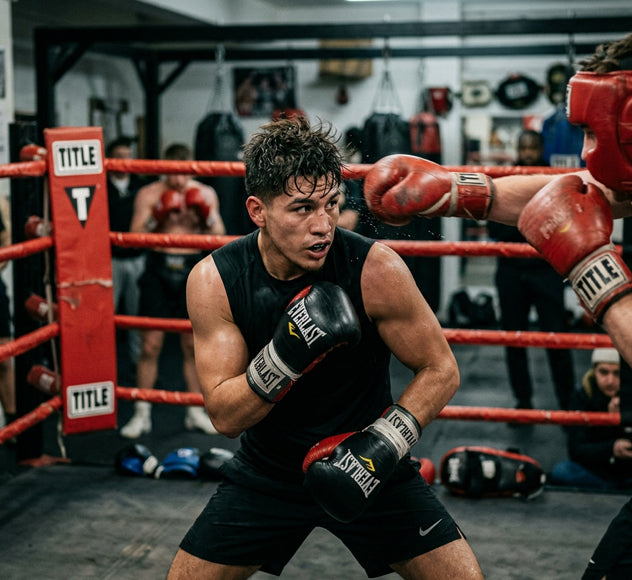

Speed is not about how fast you can throw a punch. It is also about how you can think. Every coach who has trained a champion boxer knows this is true. For some time, coaches have been using boxing speed drills to help their boxers improve. This started back in the 1900s when coaches figured out that a fast and precise punch is better than a strong punch that is not controlled.
Studies have shown that the best boxers can throw punches at speeds of 25 to 35 miles per hour and still hit their target. What is really interesting is that boxers who are not as fast but can still hit their target do better than faster boxers who miss. So it's a good idea to work on your boxing speed drills and accuracy at the same time. This will help you become a boxer and make every punch count when it really matters. Boxing speed drills are a part of this.
What Boxing Speed and Accuracy Actually Mean
In boxing, speed is defined as hand speed, punch extension speed, and reset speed. Accuracy is hitting the target and not gloves, arms, or empty air.
Most fighters train one or the other. It's all about putting both together in a structured way, which is what makes raw athleticism effective punching inside the ring.
What Separates Fast Punchers from Effective Punchers
A quick strike that is not connected wastes energy and opens you up to a counter. A punch thrown at 80% speed and landing on the chin will do much more damage than a wild shot thrown at full speed.
Boxing accuracy is what distinguishes fighters who score points from those who throw volume. The judges are not looking for the quantity of punches; they're looking for clean, effective punches.
Why Punching Speed and Boxing Accuracy Win Fights
Fast punches are delivered before your opponent can respond and react to the defense. That window is in milliseconds, but it is sufficient to get in and reset before the counter does.
Accurate punching also conserves energy. If you land on the target and not on the guard, you deliver all of your power, and your opponent absorbs all of your joules.
Why Boxing Accuracy Changes the Scorecards
Clean punching is the most important criterion for judges. A fighter who throws 40 accurate shots in a round is better than the fighter who throws 80 and misses 20, on a clean scorecard, every time.
Reaction time training is good for both qualities. The faster the reaction, the earlier you see the opening, and the earlier you throw into the opening, the sooner it closes, so you can throw both faster and more accurately in one stroke.
When to Focus on Speed vs Accuracy in Training
Beginners should prioritise boxing accuracy first. Building the habit of throwing to a target before adding speed means the technique stays correct when intensity increases.
Intermediate and advanced fighters benefit most from combining both in the same session. Speed rounds on the bag, followed by accuracy work on the double-end bag, teach the nervous system to stay precise under fatigue.
When Reaction Time Training Fits Into Your Week
Reaction time training works best at the start of a session when your nervous system is fresh. Fatigued reaction drills build the wrong responses because slow, tired movements reinforce slow, tired habits.
Two dedicated reaction sessions per week alongside your regular boxing speed drills produce measurable improvements in hand speed and target selection within four to six weeks.
How to Build Punching Speed with the Right Drills
The fastest way to improve punching speed is to train relaxed. Tense muscles fire more slowly than relaxed ones. Keeping your shoulders loose and your fists unclenched until the moment of impact adds measurable speed to every punch.
Shadow boxing at maximum speed for short bursts trains your nervous system to fire faster. Three-second all-out speed bursts followed by ten seconds of controlled movement teach your body to access top speed and recover quickly.
How to Use the Speed Bag Correctly
The speed bag trains hand rhythm and shoulder endurance, not raw punching speed. Strike the bag with the front and side of your fist in a consistent circular rhythm, keeping your elbows at shoulder height throughout.
Pair speed bag work with boxing footwork drills to stay balanced and mobile while your hands move fast. Footwork keeps your weight centered so your punches generate speed from the whole body rather than just the arms.
How the Double-End Bag Builds Speed and Timing Together
The double-end bag moves unpredictably after each strike, forcing you to reset and throw again with speed and precision. Hit it with jabs and straight rights, keeping combinations short and sharp rather than long and looping.
Start with single punches until your timing is consistent, then add two-punch combinations. The bag punishes wild shots by swinging away and punishes slow hands by returning before you reset.
How to Sharpen Boxing Accuracy Under Pressure
Target mitts with a skilled partner are the single best tool for improving boxing accuracy. A good mitt holder moves the target to simulate real punch angles, forcing you to adjust and land precisely rather than just throwing hard.
Focus pad sessions of ten to fifteen minutes with full concentration improve target acquisition faster than long, unfocused rounds. The quality of attention during the drill determines how fast the improvement transfers to sparring.
How to Train Boxing Accuracy Solo
-
Mark targets a heavy bag with tape and aims every punch at a specific spot rather than just hitting the bag
-
Shadow box in front of a mirror and identify exactly where each punch would land on an imaginary opponent
-
Use a tennis ball on a string hung at head height and practice jabbing it back to the center with precision
-
Film shadow boxing rounds and review where punches drift wide or fall short against your intended target line
How Reaction Time Training Makes You Faster in the Ring
Reaction time training reduces the delay between seeing an opening and throwing into it. A faster reaction means more punches land before your opponent closes the gap or moves their head.
The reflex ball, also called a reaction ball, attaches to your head and bounces unpredictably at close range. Striking it repeatedly at varying rhythms builds the eye-hand connection that makes your punching faster in real exchanges.
How to Run Effective Reaction Drills
-
Partner call drills: your partner calls jab, cross, or hook, and you throw that punch immediately without pause
-
Light flash drills: your partner holds up colored targets, and you throw the punch assigned to each color at sight
-
Slip and counter drills: your partner throws a slow jab, and you slip, then fire a counter combination instantly
-
Study the Dempsey Roll to understand how rhythmic weight transfer creates both evasion and offensive momentum in a single connected movement
-
Random mitt call rounds: your partner calls combinations in no set order, so your hands and eyes must read and respond rather than follow a pattern
What Gear Supports Your Speed and Accuracy Training
When training speed and accuracy at full intensity, it is important that you have the right boxing equipment to ensure that you can train safely in every session. The wrong gear will slow you down and restrict the amount of effort you can put in.
Whether it's training on the boxing bags or live sparring rounds, quality boxing equipment from Sting Sport has you covered.
Why Protective Gear Lets You Train at Full Intensity
If accuracy training requires live partner work, your training partner must have good body protectors to take the counter-punch without backing away from you during the drill. Complete protection will allow for realistic, high-intensity exchanges.
It's essential to have the right headgear for sparring to test your speed and accuracy gains; the headgear needs to be made of a material that absorbs impact without compromising your vision. If you can't see clearly, then you can't react quickly, and all your reaction drills are useless.
How Your Footwear Affects Punching Speed
Hand speed without foot speed is incomplete. Boxing shoes with the right grip and ankle support let you pivot and push off cleanly so your punches carry power from the floor up rather than from the arms alone.
Flat, grippy soles stop your feet from sliding when you need to transfer weight fast. The right Boxing shoes reduce the energy lost between your foot push and your punch extension, which adds speed without adding effort.
How Footwork Connects to Every Fast and Accurate Punch
Poor footwork puts you at the wrong range and angle before you even throw. Boxing Footwork Drills build the positioning that makes speed and accuracy possible in the first place.
A boxer with fast hands and poor feet throws fast punches from bad positions. Running Boxing Footwork Drills alongside your speed and accuracy sessions connects all three elements so they work as one system under sparring pressure.
-
Angle cutting drill: circle your opponent, cut the angle with a diagonal step, and throw one sharp punch from the new position
-
Advance and jab: step forward off your rear foot and throw your jab at the moment your front foot lands to use forward momentum
-
Lateral step and cross: side step to the right and immediately throw a straight right cross from the new angle
-
Pivot and counter: after throwing a jab, pivot 45 degrees off the center line and throw a rear hand cross from the side angle
Speed and Accuracy Drill Plan at a Glance
|
Drill |
Primary Benefit |
Session Length |
Frequency |
Difficulty |
|
Speed bag |
Hand rhythm and shoulder endurance |
5 to 10 mins |
3x per week |
Beginner |
|
Double-end bag |
Speed and timing combined |
10 to 15 mins |
3x per week |
Intermediate |
|
Focus mitts |
Boxing accuracy under movement |
10 to 15 mins |
2x per week |
All levels |
|
Reflex ball |
Reaction time training |
5 to 8 mins |
2x per week |
Intermediate |
|
Partner call drills |
Reaction and accuracy together |
5 to 10 mins |
2x per week |
All levels |
|
Shadow boxing bursts |
Punching speed output |
3 min rounds |
Daily |
All levels |
Conclusion
Building real speed and accuracy in boxing takes structured drilling, smart session planning, and the right gear to train at full intensity safely. This guide covered how boxing speed drills, accuracy work, reaction time training, and footwork all connect into one complete system that makes every punch faster and more precise.
Start with the drill that addresses your biggest gap, whether that is hand speed, target accuracy, or reaction time, and layer the others in as each one improves. Consistent, focused repetition builds the reflex that raw effort alone never produces.
Visit Sting Sport to find the full range of boxing equipment, footwear, and protective gear built to support every stage of your speed and accuracy training.
FAQs
How long does it take to improve punching speed?
After 4-6 weeks of regular speed training, most fighters can see improvements in their punching speed. Three sessions of shadow boxing or speed bagging a week will give the quickest results in the early days.
What is the best drill to improve boxing accuracy?
The best accuracy drill is to work with a skilled partner on focus mitts. The moving target requires throwing to a target instead of a static surface, and this carries over to sparring.
Are there any boxing speed drills that can be performed at home without equipment?
Yes. Shadow boxing is probably the easiest boxing speed drill and doesn't need any equipment. Three-minute rounds with the fastest hand speed with rest periods, to develop speed and endurance at home or in any open space.
Does reaction time training really make a difference in sparring?
Reaction time training is obvious when it comes to seeing and taking advantage of openings in real exchanges. Within the first month of starting, fighters who run two separate reaction sessions a week regularly report quicker decision-making.
What's the worst thing fighters do when training for speed?
The most frequent error is training speed when tense. When shoulders are tight and fists are clenched, all punches are slowed before leaving the shoulder. The quickest way to get good results in the slow boxing speed drill is to relax completely between strikes and only tense at the moment of impact.