
"A boxer without a weight class is like a race car without a lane." Weight classes in boxing exist for one non-negotiable reason: safety. Without them, a 130-pound fighter could face someone weighing 200 pounds, a mismatch that turns sport into a genuine physical danger. The concept of organized weight divisions dates back to the late 1800s, and today, professional boxing recognizes 17 official weight classes across men's and women's competition.
Whether you are a competitive boxer, a dedicated training enthusiast, or someone who just started following the sport, understanding weight classes in boxing gives you a sharper view of every fight card and helps you train smarter. This guide covers every division, every weight limit, women's categories, Canadian boxing standards, and how to match your gear to your class.
What Are Weight Classes in Boxing?
A weight class sets an upper body weight limit for competition. Every boxer must weigh at or below their division's limit at the official weigh-in, which takes place the day before the fight. If a boxer comes in over the limit, they face a short window to lose the remaining weight. Failure to make weight can result in the fight being cancelled or rescheduled as a non-title bout.
The purpose goes beyond fairness. When fighters compete at similar sizes, the risk of serious injury drops significantly. A 135-pound lightweight absorbing punches from a natural 160-pound middleweight faces a fundamentally different level of physical risk than someone fighting within their own class. Weight categories make the sport safer and more competitive at the same time.
Weight classes also shape strategy. Lighter divisions reward speed and technical precision. Heavier divisions reward power and endurance. A fighter's natural body weight, frame, and physical attributes make certain divisions better fits than others. Knowing your class is as important as knowing your technique.
A Brief History of Boxing Weight Classes
Boxing operated without formal weight divisions for most of the sport's early history. In the bare-knuckle era, fighters simply fought whoever was available, regardless of size. Dangerous mismatches were common, and the sport suffered for it.
Organized weight divisions began taking shape in the late 1800s under the Marquess of Queensberry rules. By the early 20th century, boxing recognized eight standard divisions, which fight fans still call the "glamour" or "traditional" classes: flyweight, bantamweight, featherweight, lightweight, welterweight, middleweight, light heavyweight, and heavyweight.
As the sport grew, governing bodies added new divisions between the originals to accommodate the natural weight ranges of more fighters. These additions became known as "tweener" divisions. By 2015, the four major sanctioning bodies, the WBC, WBA, IBF, and WBO, officially recognized the 17-division structure that professional boxing follows today.
All 17 Boxing Weight Classes: The Complete List
Here is the full breakdown of all recognized professional boxing weight classes in order from lightest to heaviest, with their weight limits in both pounds and kilograms:
|
Division |
Weight Limit (lbs) |
Weight Limit (kg) |
Also Known As |
|
Minimum weight |
105 lbs |
47.6 kg |
Strawweight |
|
Light Flyweight |
108 lbs |
49 kg |
Jr. Flyweight |
|
Flyweight |
112 lbs |
50.8 kg |
|
|
Super Flyweight |
115 lbs |
52.2 kg |
Jr. Bantamweight |
|
Bantamweight |
118 lbs |
53.5 kg |
|
|
Super Bantamweight |
122 lbs |
55.3 kg |
Jr. Featherweight |
|
Featherweight |
126 lbs |
57.2 kg |
|
|
Super Featherweight |
130 lbs |
59 kg |
Jr. Lightweight |
|
Lightweight |
135 lbs |
61.2 kg |
|
|
Super Lightweight |
140 lbs |
63.5 kg |
Jr. Welterweight |
|
Welterweight |
147 lbs |
66.7 kg |
|
|
Super Welterweight |
154 lbs |
69.9 kg |
Jr. Middleweight |
|
Middleweight |
160 lbs |
72.6 kg |
|
|
Super Middleweight |
168 lbs |
76.2 kg |
|
|
Light Heavyweight |
175 lbs |
79.4 kg |
|
|
Cruiserweight |
200 lbs |
90.7 kg |
Jr. Heavyweight |
|
Heavyweight |
No limit |
No limit |
|
Note: Weight limits shown reflect the standards recognized by the WBC, WBA, IBF, and WBO. Some organizations use minor variations in naming conventions.
What Is Super Lightweight?
The super lightweight sits at 140 pounds and occupies one of the most competitive and historically rich positions in professional boxing. The division goes by several names depending on the sanctioning body. The WBC and WBO call it super lightweight, while the WBA and IBF often refer to it as light welterweight or junior welterweight.
The 140-pound division sits right between the lightweight class at 135 pounds and the welterweight class at 147 pounds. Fighters in this class typically bring elite hand speed from the lighter divisions, combined with the punching power that comes with the added size. That combination makes super lightweight one of the most exciting divisions to watch and compete in.
Notable Super Lightweight Champions
The division produced some of boxing's most celebrated fighters. Aaron Pryor dominated the class in the 1980s with an aggressive, high-pressure style. Kostya Tszyu brought technical brilliance and brutal power to the division in the late 1990s and early 2000s. Josh Taylor unified all four major titles at super lightweight in 2021, becoming undisputed champion at 140 pounds. More recently, Teofimo Lopez and Shakur Stevenson have added their names to an already impressive legacy at this weight.
Training for Super Lightweight
Fighters who compete at super lightweight typically walk around at 145 to 155 pounds between fights. They manage their weight through structured diet, hydration, and conditioning rather than extreme cuts. If you train at or near this weight, your gear selection matters. A well-fitted pair of 10 to 12 oz competition gloves, proper 210-inch hand wraps, and solid protective gear all support better performance and reduced injury risk at this level.
Women's Boxing Weight Classes
Women's boxing has grown dramatically over the past two decades. The sport now produces elite competitors and world champions across every division, with names like Katie Taylor, Claressa Shields, and Amanda Serrano building a global audience for women's professional boxing.
Professional women's boxing recognizes the same 17 weight classes as the men's divisions, with identical weight limits. The sanctioning bodies apply the same framework, though some organizations vary slightly in which specific classes they officially recognize or promote. At the Olympic level, women's boxing competed across six weight categories at the Paris 2024 Games.
The women's boxing weight classes follow the same divisional structure as men's competition, from minimumweight at 105 pounds up through heavyweight. Women competing in heavier divisions may use chest protectors as part of their required protective equipment in amateur competition, while professional rules follow the standards set by the relevant sanctioning body.
Growth of Women's Boxing in Canada
Canadian women's boxing produced its most celebrated moment at the Tokyo 2020 Olympics, where Mandy Bujold secured her place in the Games after a landmark legal fight to compete despite maternity leave affecting her ranking. The Canadian boxing community continues to build its women's program across all weight categories through Boxing Canada and its provincial branches.
Boxing Weight Classes in Canada
Boxing weight classes in Canada follow the framework established by Boxing Canada, which serves as the national governing body for amateur boxing in the country. Canada's provincial boxing commissions, including Boxing Ontario, Boxing BC, and Boxing Nova Scotia, all operate under Boxing Canada's articles and rules.
Canada follows the same 17-division weight structure used internationally in professional boxing. For amateur competition, Boxing Canada aligns with World Boxing weight categories, which were updated in 2024 and 2025 to reflect new international standards. Amateur boxers in Canada must make weight at an official weigh-in prior to their bout. The allowable weight difference between opponents across all classes is 4.5 kg.
Amateur vs. Professional Weight Rules in Canada
Amateur boxing in Canada places additional emphasis on experience classification alongside weight. Boxers fall into one of two experience categories: Novice, for fighters with 10 bouts or fewer, and Open, for fighters with more than 10 bouts. This means a fighter can compete in the correct weight class but still face restrictions on who they can be matched against based on their experience level.
Professional boxing in Canada operates under the oversight of provincial athletic commissions. British Columbia's Athletic Commissioner and Ontario's regulatory body both use the standard 17-division structure, with weigh-ins held the day before the scheduled fight. Fighters who miss weight at a professional event face point deductions, potential forfeiture of title eligibility, or cancellation of the bout entirely.
How to Find Your Weight Class in Canada
If you train at a Boxing Canada–registered club, your coach helps you determine your natural competitive weight class. The process involves assessing your current body weight, your physical frame, and how much weight you can realistically manage without compromising your performance or health. Boxing Canada recommends that young boxers, especially those in the Junior and Youth categories, compete at their natural weight rather than attempt significant cuts.
Choosing the Right Gloves, Wraps, and Protective Gear for Your Weight Class
Your weight class directly influences the gear you need. Lighter fighters use smaller gloves that suit their hand size and the speed demands of their division. Heavier fighters need larger, more padded gloves to manage the greater force being exchanged. Using the wrong glove size does not just affect performance. It increases the risk of hand, wrist, and face injuries for both fighters.
Gloves
Boxing gloves come in ounce sizes that reflect the amount of padding inside. Lighter weight classes typically use 8 oz gloves in competition, mid-range divisions use 10 to 12 oz, and heavier classes fight in 14 to 16 oz gloves. For training and sparring, most coaches recommend going one size above your competition glove weight to protect both yourself and your training partners. Sting Sport's glove range covers every weight class, built to meet the demands of both competitive and training environments.
Wraps
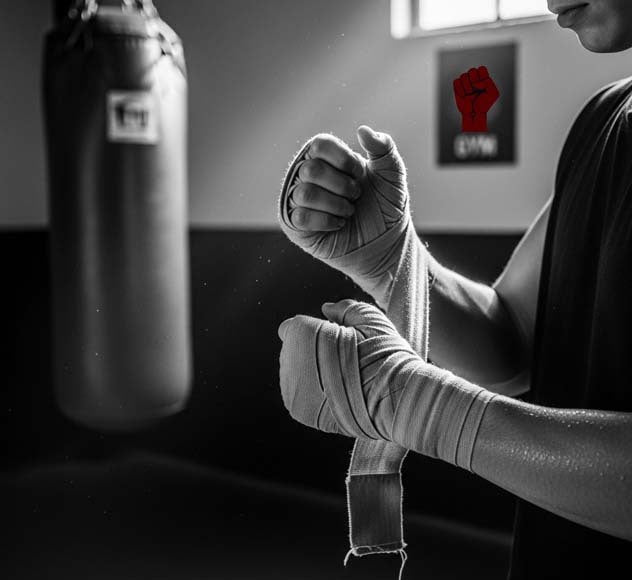
Hand wraps protect the small bones and joints inside the hand and wrist before you put on your gloves. Lighter fighters with smaller hands work well with 180-inch cotton wraps. Fighters in the middle and heavier divisions benefit from 210-inch wraps that give more coverage over the knuckles and wrist. Gel wraps offer additional cushioning and work well for training sessions. Wraps are not optional. They reduce the risk of hairline fractures and wrist sprains that can sideline a fighter for weeks.
Protective Gear
Essential protective gear includes a mouthguard, groin guard, and headgear for amateur competition. Women's amateur boxing also requires a chest protector. For training purposes, body protectors, shin guards during combination drills, and elbow supports for heavier sparring all add a layer of injury prevention. Choosing gear that fits your weight class and body size correctly matters as much as the quality of the equipment itself.
A Note on the Weightlifting Belt
Many boxers include strength and conditioning work as part of their training program. When that work involves heavy compound lifts such as deadlifts or squats, a weightlifting belt supports the lower back and core under load. This is not a ring gear, but it plays a real role in injury prevention for fighters who train hard in the gym. A good belt allows you to lift with more stability and protect your spine during heavy sessions, which keeps you healthy and consistent in your boxing training over the long term.
Gear by Weight Class: Quick Reference Table
Use this table to match your weight class to the correct equipment for both training and competition:
|
Weight Class Range |
Gloves (oz) |
Wraps |
Protective Gear |
|
Minimum weight to Flyweight (up to 112 lbs) |
8 oz |
180-inch cotton wraps |
Mouthguard, groin guard, headgear (amateur) |
|
Super Flyweight to Featherweight (up to 126 lbs) |
10 oz |
180-inch or 210-inch wraps |
Mouthguard, groin guard, chest guard (women) |
|
Lightweight to Welterweight (up to 147 lbs) |
10–12 oz |
210-inch wraps |
Mouthguard, groin guard, optional headgear |
|
Super Welterweight to Middleweight (up to 160 lbs) |
12–14 oz |
210-inch wraps |
Mouthguard, groin guard, elbow support |
|
Super Middleweight to Heavyweight (160+ lbs) |
14–16 oz |
210-inch or longer wraps |
Full mouthguard, groin guard, ankle support |
Final Thoughts
Understanding weight classes in boxing gives every fighter and every fan a more complete picture of the sport. Divisions exist to protect fighters, create fair competition, and reward athletes who find the weight class that best suits their body and their skills. From the lightning-quick minimum weights to the power-driven heavyweights, every class tells a different story about what the human body can do when properly trained and correctly matched.
Whether you are figuring out where you compete, choosing the right gear for your class, or simply trying to understand the sport better, the weight class system sits at the center of everything boxing does well. Sting Sport carries competition-grade gloves, wraps, and protective gear built for every weight class and every level of the sport. Explore the full range at Sting Sport and get equipped to train and compete at your best.
FAQs
How many weight classes are there in boxing?
Professional boxing currently recognizes 17 weight classes in both men's and women's competition. These divisions run from minimumweight at 105 pounds up to heavyweight, which carries no upper weight limit. The 17-division structure received its current standardized naming from the four major sanctioning bodies, WBC, WBA, IBF, and WBO, in 2015.
What are boxing weight classes in Canada?
Boxing weight classes in Canada follow the same 17-division structure used internationally, governed nationally by Boxing Canada and administered at the provincial level by commissions in each province. Amateur competition in Canada also factors in experience classification alongside weight, with boxers categorized as Novice or Open based on their number of competitive bouts.
What is the super lightweight division in boxing?
Super lightweight is the 140-pound weight class that sits between lightweight at 135 pounds and welterweight at 147 pounds. The division goes by several names, including light welterweight and junior welterweight, depending on the sanctioning organization. It produces some of the sport's most exciting matchups due to the combination of speed and power at this weight.
What size gloves should I use for my weight class?
Glove size in competition depends on your weight class. Fighters at minimumweight through flyweight typically use 8 oz gloves. Featherweight through welterweight fighters use 10 oz. Heavier classes move to 14 and 16 oz. For sparring and training, go one size up from your competition glove to protect your hands and your training partner. Always confirm the requirements with your coach and your sanctioning body before competition.
Do women's boxing weight classes differ from men's?
Women's professional boxing weight classes use the same 17 divisions and the same weight limits as men's professional boxing. The key differences appear in the equipment rules for amateur competition, where women require additional chest protection, and in the specific divisions that each sanctioning body chooses to actively promote. At the Olympics and major amateur competitions, women compete across a smaller set of weight categories that continue to expand as the sport grows.