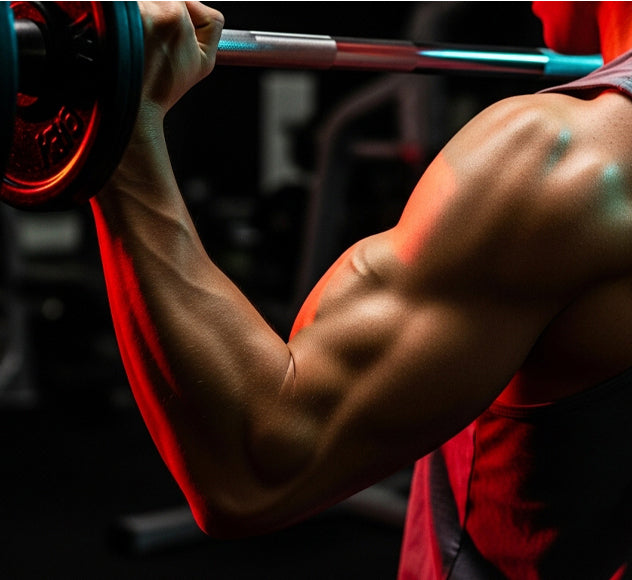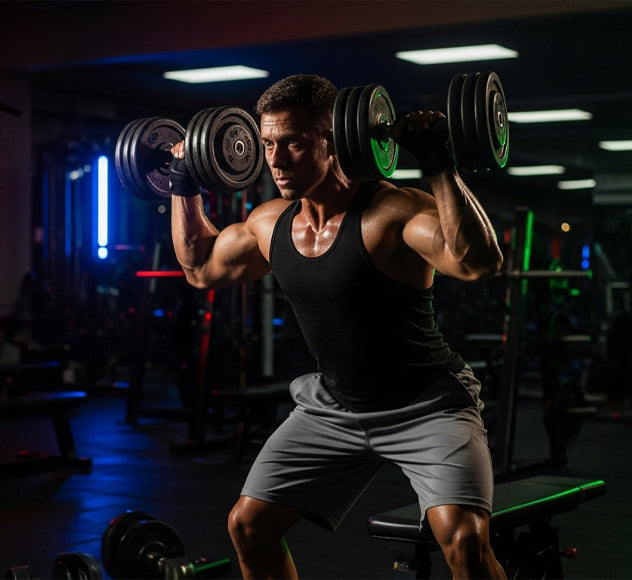

The way lifters train their shoulders is usually a balance of personal taste and injury history. Is putting heavy weight overhead the ultimate goal, or does it make you wince just thinking about it? For some, raises are the foundation of every session; for others, they barely register as a priority.
What often gets missed is that effective shoulder workouts aren’t defined by preference alone. Performance data from strength and combat training shows shoulders respond best when stability, rotation, and endurance are trained alongside load. That’s where less common movements separate short-term progress from long-term strength, especially in programs built around real athletic demand.
Why Shoulder Workouts Need Variety Beyond Pressing
The shoulder joint manages force from multiple angles. Repeating linear presses limits adaptation and leaves stabilizers undertrained. Boxing-focused strength programs address this through controlled instability, unilateral loading, and endurance-driven drills that support repeated striking and defensive movement.
1. Cuban Press Hold
Purpose: Improves external rotation and overhead stability.
Steps:
-
Hold light dumbbells with elbows bent at 90 degrees.
-
Raise elbows to shoulder height with forearms pointing down.
-
Rotate forearms upward until they are vertical.
-
Press the weights overhead slowly.
-
Hold at the top for three seconds.
-
Lower back down following the same path.
Keep movements controlled. The load should remain light to maintain form.
2. Landmine Arc Press
Purpose: Builds pressing strength through a joint-friendly range.
Steps:
-
Secure one end of a barbell into a landmine base.
-
Grip the free end with one hand at chest height.
-
Press the bar upward and forward in an arcing motion.
-
Finish with the arm extended but not locked.
-
Reverse the arc slowly back to the start.
Switch arms after each set to maintain balance.
3. Lean-Away Lateral Raise
Purpose: Increases time under tension at weaker shoulder angles.
Steps:
-
Hold a dumbbell in one hand.
-
Use the opposite hand to hold a stable support.
-
Lean your body slightly away from the working arm.
-
Raise the dumbbell out to the side until shoulder height.
-
Lower slowly, maintaining tension throughout.
This movement requires lighter weight than standard lateral raises.
4. Kettlebell Bottom-Up Carry
Purpose: Trains shoulder stability and grip coordination.
Steps:
-
Hold a kettlebell upside down by the handle.
-
Keep elbow bent at 90 degrees.
-
Engage the shoulder and core.
-
Walk slowly for the set distance or time.
-
Keep the bell steady without letting it tip.
This drill fits well into conditioning sessions alongside a punching bag workout.
5. Z-Press with Pause
Purpose: Develops strict shoulder strength without leg assistance.
Steps:
-
Sit on the floor with legs extended.
-
Hold a barbell or dumbbells at shoulder height.
-
Press upward until arms are nearly straight.
-
Pause halfway through the press for two seconds.
-
Continue pressing to the top.
-
Lower with control.
Core engagement is essential to maintain balance.
6. Plate Halo Rotations
Purpose: Improves shoulder endurance and mobility.
Steps:
-
Hold a weight plate close to your chest.
-
Move the plate slowly around your head in a circular path.
-
Keep elbows tucked close to the body.
-
Complete full rotations in one direction.
-
Switch directions after completing the set.
Movement should remain smooth and controlled.
7. Banded External Rotation Drop Sets
Purpose: Strengthens rotator cuff endurance.
Steps:
-
Attach a resistance band to a fixed point.
-
Hold the band with your elbow pinned to your side.
-
Rotate the forearm outward against resistance.
-
Continue until fatigue sets in.
-
Step closer to reducing resistance.
-
Continue rotating without rest.
This approach supports shoulder health used in defensive strategies training.
8. Single-Arm Arnold Press
Purpose: Builds unilateral shoulder strength and coordination.
Steps:
-
Hold a dumbbell at shoulder height with palm facing inward.
-
Rotate the palm outward as you press overhead.
-
Finish with the arm extended above the shoulder.
-
Reverse the rotation while lowering the weight.
-
Maintain tension throughout the movement.
Complete all reps on one side before switching.
9. Push-Up to Pike Hold
Purpose: Develops shoulder strength under bodyweight load.
Steps:
-
Start in a standard push-up position.
-
Perform one push-up.
-
Shift hips upward into a pike position.
-
Hold the pike for five seconds.
-
Return to the push-up position and repeat.
This drill challenges shoulder endurance under fatigue.
10. Resistance Band Punch-Outs
Purpose: Builds shoulder stamina for repeated striking.
Steps:
-
Anchor a resistance band behind you.
-
Hold the band handles at shoulder height.
-
Extend arms forward in a punching motion.
-
Retract under control.
-
Maintain a steady rhythm for the full set.
This movement closely mirrors combat conditioning protocols used with Sting Sport equipment.
Comparing Top Shoulder Workouts
|
Exercise |
Focus Area |
Equipment |
Training Goal |
|
Cuban Press Hold |
Stability |
Dumbbells |
Joint control |
|
Landmine Arc Press |
Strength |
Barbell |
Power transfer |
|
Bottom-Up Carry |
Control |
Kettlebell |
Endurance |
|
Z-Press Pause |
Strength |
Barbell |
Weak-point work |
|
Band Punch-Outs |
Endurance |
Bands |
Sport carryover |
Conclusion
The best shoulder workouts require training that aligns with real performance requirements rather than habitual gym habits. Rotational control, endurance under fatigue, and unilateral strength determine how effectively shoulders stand up during intense sessions or competition.
These shoulder workouts mirror how combat athletes train using Sting Sport equipment, where durability and output matter more than isolated strength. Incorporating these movements into regular training helps build shoulders that remain powerful, controlled, and reliable round after round.
FAQs
Q1. How many times a week should the shoulder workouts be trained?
The majority of lifters experience incremental gains using two or three training sessions weekly on shoulder exercises. Stability and endurance exercises should be done at the same volume, as this would facilitate a more effective recovery, in particular, when the exercises are divided between the sessions.
Q2. Do these provide the best shoulder exercises to individuals with previous shoulder pain?
Control, rotation, and lighter loading are some of the best shoulder workout routines and are beneficial to lifters who are dealing with past discomfort. Such exercises as carries, band work, and paused presses decrease the load on the joints but do not decrease the intensity of training.
Q3. Would top shoulder exercises enhance performance other than muscle size?
The best exercises to work on your top shoulders are the ones that make you look amazing. The stability and endurance training help in the power of punching, control, and resistance to fatigue, this is the reason behind the same movements applied in the combat-based programs constructed around Sting Sport equipment.