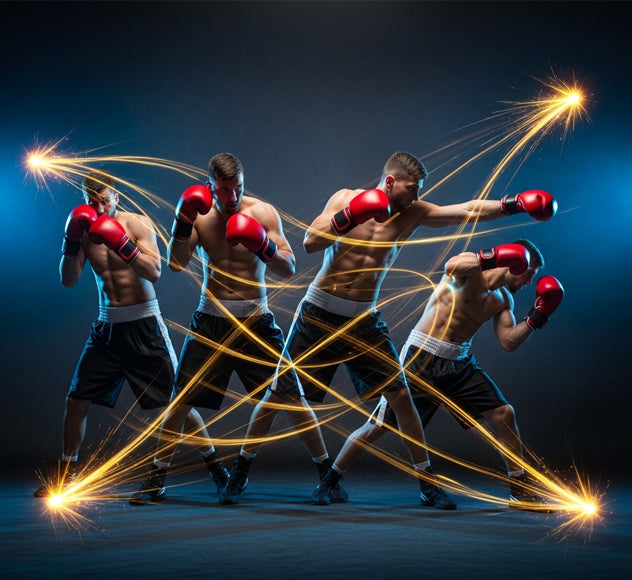

"The punch you don't see coming is the one that puts you down." Every boxing fan has heard this, and every great knockout in history has proved it true. A knockout punch is not simply a hard hit. It is the product of timing, technique, body mechanics, and the right moment to pull the trigger. Boxing records show that over 60% of professional fights end before the final bell, with the majority of stoppages coming from a small selection of punches thrown correctly at precisely the right moment.
From Rocky Marciano's devastating right hand to Sugar Ray Robinson's perfect left hook, the best knockout punch in boxing history shares one thing in common: it was set up with intelligence before it was thrown with power. This blog breaks down the 5 most effective knockout punches, how they work, and the legendary moments that defined them.
What Makes a Knockout Punch in Boxing?
Not every powerful punch becomes a knockout. What separates a hard shot from a fight-ending blow comes down to a combination of factors working together at the same time.
The Four Pillars of a Knockout Punch in Boxing
|
Factor |
Why It Matters |
|
Timing |
A punch landing as the opponent moves into it multiplies the impact dramatically |
|
Accuracy |
The chin, jaw hinge, and temple are the primary knockout targets |
|
Body mechanics |
Hips, legs, and shoulder rotation generate far more power than arm strength alone |
|
Surprise |
Punches that cannot be seen coming bypass the body's natural bracing reflex |
The brain sits suspended inside the skull in cerebrospinal fluid. A sharp rotational force to the jaw or chin causes the brain to rotate inside the skull, disrupting neural function and triggering a knockout. This is why punches landing flush on the chin are far more dangerous than those absorbed by the forehead, where the skull is thickest.
5 Most Effective Knockout Punches in Boxing
1. The Cross
The cross is the most reliable knockout punch in a boxer's arsenal. Thrown straight down the centre line with the rear hand, it uses the full kinetic chain of the body. The power starts at the back foot, travels up through the legs, rotates through the hips and shoulders, and transfers entirely into the fist at the point of contact.
How to Throw It
-
Push off the back foot as you rotate your hips forward
-
Turn the shoulder fully into the punch
-
Extend the rear hand straight toward the target, chin tucked behind the lead shoulder
-
Snap the fist through the target, not just to it
-
Return to guard immediately after contact
The cross works from range, travels the shortest path to the target, and generates force from the body's strongest muscle groups. When landed flush on the chin, the rotational force is enough to disrupt the opponent's equilibrium instantly. Boxers typically set it up with a sharp flicker jab in boxing to draw the opponent's guard up and create a clear path down the centre line.
Famous Knockout
George Foreman's title-winning right cross against Michael Moorer in 1994 is one of boxing's most celebrated moments. Trailing badly on points in round ten, Foreman landed a perfectly timed right hand directly on Moorer's chin. Moorer went down and could not beat the count. At 45 years old, Foreman became the oldest heavyweight world champion in history with a single punch.
2. The Left Hook
The left hook is widely considered the best knockout punch in boxing. Unlike the cross, which travels in a straight line, the hook arrives from the side. Its circular arc allows it to bypass a high guard and land directly on the jaw, the most sensitive target for a rotational knockout. The body's rotation and shoulder drive make it one of the most powerful punches a boxer can throw.
How to Throw It
-
Pivot on the lead foot, rotating your entire body to the right
-
Keep the lead elbow at roughly 90 degrees, parallel to the ground
-
Swing the fist in a tight horizontal arc toward the jaw
-
Drive the rotation from the hips, not just the arm
-
Keep your rear hand high to protect against a counter
The left hook is the punch of choice for legendary knockout artists, including Oscar De La Hoya, Miguel Cotto, and Roy Jones Jr. Its power comes not from arm strength but from full-body rotation, meaning even lighter fighters can produce devastating, powerful hooks in boxing with correct technique.
Famous Knockout
Sugar Ray Robinson's left hook against Gene Fullmer in 1957 is regarded by boxing historians as one of the most technically perfect punches ever thrown. Fullmer was considered nearly impossible to knock out. Robinson landed one left hook, and Fullmer went down face-first. The punch was described by ringside observers as a single, perfectly placed shot that ended the fight before anyone realised it had happened.
3. The Uppercut
The uppercut is the most deceptive knockout punch in boxing. It travels upward from below the opponent's line of sight, making it nearly impossible to track once a fighter is at close range. Samuel Elias, known as "Dutch Sam," is credited with creating this punch in the early 1800s, originally calling it the "undercut." It was reported that Dutch Sam created significant problems for opponents until a method to block it was eventually developed.
How to Throw It
-
Drop the punching hand slightly and bend your knees to load the shot
-
Rotate the hips upward as you drive the fist vertically toward the chin
-
Keep the punch compact at close range, do not wind up or telegraph
-
Aim for the point of the chin for the maximum rotational effect
-
Stay close to the target throughout the motion
The uppercut is most effective at close quarters. Its upward path slips under a high guard and hits the chin or jaw with force that appears to come from nowhere. Mike Tyson built his most terrifying combinations around short, explosive uppercuts thrown from his Peek-a-Boo stance.
Famous Knockout
Mike Tyson's uppercut against Michael Spinks in 1988 remains one of the most stunning performances in heavyweight history. Spinks entered the fight with a 31-0 record. Tyson dropped him in the first round with a short right uppercut during an exchange, and Spinks never made it back to his feet. The fight lasted 91 seconds.
4. The Overhand Right
The overhand right is a looping punch that arcs over the opponent's lead hand and crashes down onto the top of the jaw or temple. It bypasses guards that a straight cross cannot penetrate and is particularly effective against shorter opponents or fighters who tend to crouch. Jack Dempsey refined this punch in the early 20th century, using it in devastating combinations with hooks during his 1919 title fight against Jess Willard.
How to Throw It
-
Step forward with the lead foot at a slight angle
-
Drive off the back leg and rotate the shoulders aggressively
-
Arc the rear hand up and over in a looping downward path
-
Aim to land on the jaw, temple, or hinge of the jaw
-
Keep the lead hand high throughout the motion to guard against a counter
The mechanics of this punch are similar to throwing a baseball. It generates significant torque through the body's rotation, combined with the weight of the arm travelling downward, which adds additional force at the point of impact.
Famous Knockout
Juan Manuel Marquez's overhand right against Manny Pacquiao in 2012 produced one of the most dramatic moments in modern boxing history. Marquez feinted low to draw Pacquiao's guard down, then threw a perfectly timed overhand right as Pacquiao came forward. Pacquiao landed face-down on the canvas at the exact moment the final bell sounded. The precision of the setup made it one of the most calculated knockout punches ever recorded.
5. The Counter Punch
The counter punch is not a single technique but a timing principle applied to any punch in a boxer's arsenal. A perfectly timed counter is widely regarded as the absolute strongest type of knockout punch in boxing because it uses the opponent's own forward momentum against them. When a fighter moves into an incoming punch, the combined velocity of both bodies dramatically multiplies the impact force.
How to Throw It
-
Read the opponent's attack pattern by observing shoulder and foot movement
-
Slip, roll, or step to avoid the incoming shot
-
Fire your chosen counter immediately as the opponent's punch extends and they are briefly off-balance
-
Target the chin or jaw to maximise the rotational knockout effect
-
Commit fully to the target without hesitation
The counter can be a cross, hook, uppercut, or overhand. What makes it a fight-ender is the timing, not the punch type itself. Fighters who cannot see the counter coming have no time to tense their neck muscles or brace, which is precisely why counterpunches produce disproportionately high knockout rates. Developing this skill requires consistent live sparring with quality sparring gloves that protect both fighters while allowing realistic exchanges.
Famous Knockout
Manny Pacquiao's counter left hook against Ricky Hatton in 2009 was a textbook example. Hatton moved forward aggressively. Pacquiao slipped to his right and threw a short left hook directly into Hatton's path. The combined momentum of both fighters meeting on Hatton's chin ended the fight on the spot. Hatton was unconscious before he hit the canvas.
Knockout Punch Set: How the Best Combinations Work
No effective knockout punch set happens in isolation. Every fight-ending punch is built on setup shots thrown before it. Practising these combinations in sparring with proper headgear is the only way to develop the real-time reading skills needed to land them under pressure.
|
Knockout Punch |
Common Setup |
|
Cross |
Jab to draw the guard up, then cross through the middle |
|
Left Hook |
Cross to make the opponent lean back, then hook around the guard |
|
Uppercut |
Body shot to lower the guard, then uppercut straight up the middle |
|
Overhand Right |
Jab to preoccupy, then loop the overhand over the lead hand |
|
Counterpunch |
Invite the attack with movement or a feint, time the opponent's extension |
The best knockout punches in history were not accidents. They were the result of deliberate setup, patient movement, and a single committed shot thrown at exactly the right moment.
What Gear You Need to Train Knockout Power
Training knockout punches correctly requires proper gear at every stage. Throwing power shots without the right equipment is a fast way to damage your hands, wrists, and joints long before you develop any real punching skill.
Boxing gloves are the foundation. Sting Sport's professional boxing gloves are built to absorb repeated heavy impact, protect the knuckles, and support the wrist through the rotation required for powerful hooks, crosses, and uppercuts. The right glove weight matters: heavier gloves for bag and pad work, competition-weight for sparring sessions.
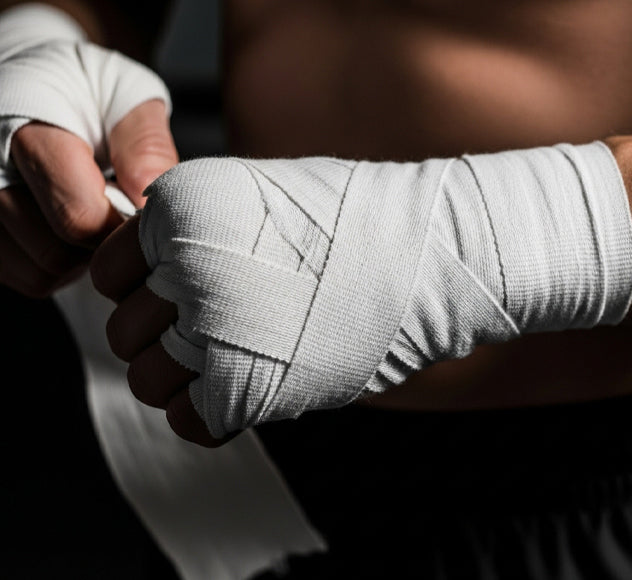
Hand wraps go on before the gloves, every single time. They compress the small bones of the hand, stabilise the wrist joint, and reduce the risk of fractures during heavy bag training or hard sparring rounds. No serious boxer trains knockout combinations without them.
Conclusion
Every knockout punch that has ever stopped a fight carries the same ingredients: timing, technique, accuracy, and setup. The cross, the left hook, the uppercut, the overhand right, and the counterpunch are the five most proven fight-enders in the history of the sport. Mastering even one of these changes how you approach every round. Mastering all five changes how opponents approach you.
Whether you are working on combinations on the bag or stepping into your first sparring session, the right equipment makes every repetition count. Explore the full range of professional boxing gear at Sting Sports and train the way the best knockout punch artists in history trained, with preparation, precision, and purpose.
FAQs
Q1. What is the most effective knockout punch in boxing?
The left hook is widely considered the best knockout punch due to its ability to bypass the guard and land on the jaw with full-body rotational force.
Q2. What are the main knockout punches in boxing?
The five most effective knockout punches are the cross, left hook, uppercut, overhand right, and counter punch. Each targets the chin or jaw to disrupt the brain's equilibrium.
Q3. Why do knockout punches target the chin?
The chin and jaw hinge create rotational force on the brain when struck. This disrupts neural function far more effectively than punches absorbed by the forehead or skull.
Q4. What is a knockout punch set?
A knockout punch set refers to the combination of setup shots and the finishing blow. The setup creates the opening and the finishing punch exploits it.
Q5. What gear do I need to train knockout punches?
You need boxing gloves, hand wraps, sparring gloves, and headgear. Each piece protects specific areas during the heavy bag work and sparring needed to develop real knockout power.