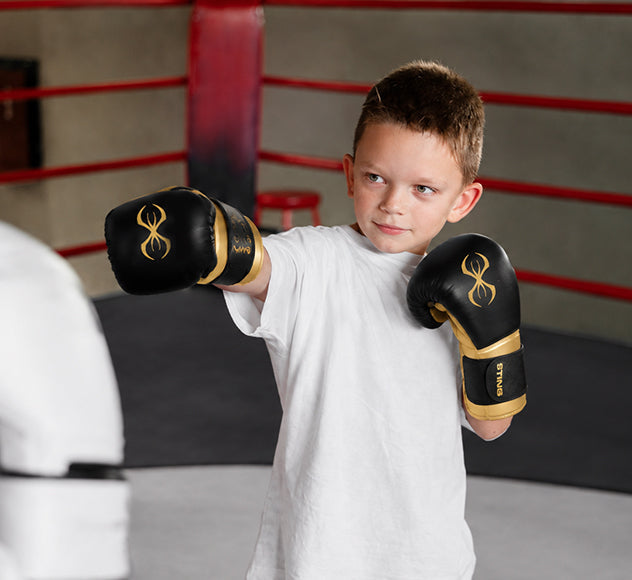

Choosing the wrong gloves is one of the most common mistakes made by beginner boxers. A suitable pair of gloves not only protects your hands but also helps support your wrists and allows training in the same manner as you do. The following guide will help you know what type of gloves to choose, how much weight they should have, etc.
Quick Answer
Choose gloves that suit your training regimen and not merely your budget. Use gloves weighing between 14 and 16 oz for sparring, 12 to 14 oz for hitting the bags and pads, and light competition gloves weighing between 8 to 10 oz only when participating in sanctioned matches. Measure your dominant hand's girth and take your bodyweight into account to choose the appropriate size.
Types of Boxing Gloves
|
Glove Type |
Best For |
Padding Level |
|
Training Gloves |
Beginners, mixed bag and pad work |
Medium, all-purpose |
|
Sparring Gloves |
Partner drills and controlled sparring |
High, protects both boxers |
|
Bag Gloves |
Heavy bag and pad focused sessions |
Lower, built for feedback on impact |
|
Competition Gloves |
Sanctioned amateur or pro bouts |
Lowest, built for speed and scoring |
Training gloves are the standard starting point. They're padded enough for bag work and light sparring, which makes them the most practical first purchase if you're not yet sure which direction your training will take.
Sparring gloves carry extra padding across the knuckles specifically to protect your sparring partner as well as your own hands. If you plan to spar regularly, treat these as a separate purchase from your bag gloves rather than a substitute.
Bag gloves are built with less cushioning on purpose. Less padding means you feel the impact of each strike, which helps you correct your form and technique over time rather than masking bad habits.
Competition gloves are the lightest option, designed to let a boxer's hands move fast and let judges see clean scoring shots. They trade protection for speed, so they're reserved for the ring, not the gym.
Understanding Glove Weight (oz)
Boxing gloves are measured in ounces, and that number tells you how much padding, and therefore protection and weight, the glove carries. Most gyms standardize around a few common weights.
|
Ounce Weight |
Typical Use |
Who It Suits |
|
8 to 10 oz |
Competition |
Amateur and pro bouts, lighter bodyweights |
|
12 to 14 oz |
Bag and pad work |
Most adults doing technical training |
|
14 to 16 oz |
Sparring |
Nearly all sparring sessions, most gyms require this minimum |
|
16 to 18 oz |
Heavy sparring or larger boxers |
Bigger bodyweights, extra cushioning needed |
Because pad and bag work wears down padding faster than sparring does, it's worth owning two pairs eventually. One dedicated to bag and pad training, and a heavier pair reserved for sparring.
How to Measure Your Hand for the Right Fit
Sizing a glove correctly comes down to three numbers. Your height, your body weight, and the circumference of your dominant hand, measured around the widest part of your knuckles with your hand relaxed and open. Body weight is the biggest factor since heavier boxers generally need more ounces to cushion harder punches, while hand circumference tells you whether you need a narrower or wider glove shell regardless of ounce weight. If you fall between two sizes on a chart, size up rather than down. A slightly loose glove is safer than one that restricts circulation or limits your fist from fully closing.
Key Features to Consider
Material
Gloves are typically made from genuine leather or synthetic leather. Genuine leather holds its shape and padding density longer under heavy use, which matters if you're training several times a week. Synthetic materials cost less upfront, wipe clean more easily, and are a reasonable choice if you're testing out the sport before committing to premium gear.
Padding and Wrist Support
More padding isn't automatically better. What matters is padding matched to purpose. Sparring needs dense, layered foam to absorb repeated contact, while bag gloves are intentionally firmer so you can feel your technique. Wrist support matters just as much as knuckle padding. A wider wrist strap limits the wrist from bending on impact, which is one of the most common injury points for boxers who train frequently.
Closure Type, Velcro or Lace Up
Velcro gloves go on and off without help, which makes them the practical choice for everyday gym sessions where you're switching between drills.
Lace up gloves need someone else to tighten and tie them, but they reward that inconvenience with a more locked in, customizable fit around the wrist. This is why lace ups are the standard for professional fights and higher level competition, where fighters have a corner team on hand to lace them.
Neither closure is objectively better. The right one depends on whether you're training solo or have a coach or partner available before every session.
Amateur vs Professional Competition Gloves
Competition gloves aren't one size fits all either. Amateur gloves follow stricter regulations and are usually easy to identify by their red or blue coloring with a white knuckle overlay, a design that helps ringside judges score clean punches more easily. Professional gloves have fewer color and design restrictions but are built to the same principle, which is minimal cushioning so power and accuracy are clearly visible to judges and opponents alike. If you're stepping into sanctioned competition for the first time, check with your coach or governing body before buying, since weight class and organization rules often dictate the exact glove specification allowed.
Try Before You Commit
Whenever it is feasible, try putting on the gloves with a hand wrap underneath, as that is how you will really wear them when you train. A good-fitting glove should fit well without feeling pinched; your fingers shouldn’t touch the top part of the glove, and your wrist should be supported by the glove.
What the Pros Got Right
Even the elite fighters picked up gloves in accordance with their own technique. In order to train with such gloves, the ones resistant to high-power punching were needed, since they require strength. For the whole description of those gloves, see what size gloves did Mike Tyson use.
Whereas Muhammad Ali preferred gloves that were lighter to suit his style and speed of movement while still offering him enough protection. Check out the specifications on what boxing gloves did Muhammad Ali use.
It is important to understand that there is no one-size-fits-all solution while choosing gloves because the right boxing gloves are always dependent on your individual fighting style, weight, and training objectives.
Final Thoughts
It is important to note that material, glove type, padding, ounces, and closure are all interconnected. It is necessary to first figure out what the gloves will be used for, whether it is bag work, sparring, or competitions, compare the gloves with your weight and hand size, and put them on with a wrap before purchasing them. To find gloves that will withstand all types of training, check out Sting Sports full glove range.
FAQ
What size boxing gloves do I need as a beginner?
Most beginners do well starting with 12 to 14 oz training gloves for bag and pad work, then moving to a 14 to 16 oz pair once sparring is introduced.
What's the difference between sparring gloves and training gloves?
Sparring gloves carry extra padding specifically to protect both fighters during partner drills. Training gloves are a lighter, all-purpose option meant to cover both bag work and occasional sparring.
Should I choose Velcro or lace-up gloves?
Choose Velcro if you train solo and need to get gloves on and off quickly. Choose lace-up if you have a partner or coach available to tie them and want the tighter, more customizable fit used in competition.
How do I know if boxing gloves fit correctly?
Try them on with a hand wrap. Your fingers shouldn't touch the top of the glove, your fist should close comfortably, and your wrist should feel supported without any looseness inside the cuff.
Do heavier gloves mean better protection?
Generally yes for the wearer's hands, but heavier gloves also add resistance and change your training feel. Match the ounce weight to your activity, lighter for bag feedback, heavier for sparring, rather than assuming heavier is always the safer default.