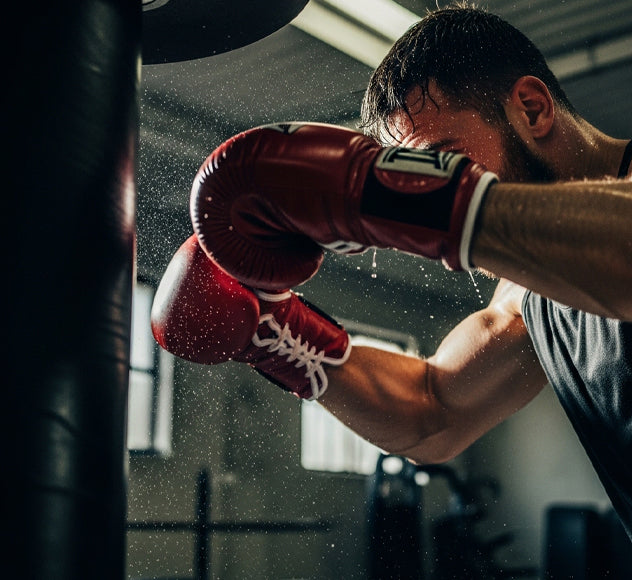

"Champions are made from something they have deep inside them — a desire, a dream, a vision." Long before those words carried weight, humans were already settling disputes and testing courage with their fists. Combat sports are among the oldest recorded human activities, stretching back over 6,000 years. From bare-knuckle brawls carved into Sumerian stone to the sold-out arenas of Las Vegas, boxing has survived the rise and fall of entire civilizations.
It has shaped military training, culture, and identity across continents. Today, over 700 million people worldwide watch professional boxing, making it one of the most-followed combat sports on the planet. This blog traces that extraordinary journey, covering origins, rule changes, gear evolution, fighting styles, and the legends who made boxing what it is today.
Where Did Combat Sports Begin?
The roots of combat sports run deeper than most people imagine. Archaeological evidence places the earliest signs of boxing in Ethiopia and Nubia as far back as the 6th millennium BC. When the Middle Kingdom of Egypt invaded Nubia, fighters brought the art of boxing back to Egypt, where it spread through their culture. Sumerian relief carvings from the 3rd millennium BC depict men engaged in fistfights, while a relief found in Thebes dating to around 1350 BC shows both boxers and spectators gathered around a match.
These early contests were raw and unregulated. Fighters used no gloves, no rounds, and no weight categories. Matches ended only when one man could no longer stand or raised a finger to signal defeat. The sport was brutal by design, serving as both entertainment and physical preparation for war.
Fistfighting appeared independently across cultures, including ancient India, where the Mahabharata references combat between fighters who used punches, kicks, knee strikes, and headbutts. Russia also developed its own form of bare-knuckle boxing called Kulachniy Boy, which produced three distinct styles of fist fighting that were later celebrated in literature, poetry, and folk art.
How Ancient Greece Shaped Boxing
Greece gave combat sports their first real structure. In 688 BC, boxing was officially introduced to the Olympic Games during the 23rd Olympiad, making it one of the oldest Olympic disciplines still practiced today. The Greeks called it "pygmachia," meaning fist-fighting, and treated it as a mark of athletic and intellectual discipline.
Greek fighters wrapped their hands in soft leather thongs to protect their knuckles while increasing striking force. There were no rounds, no ring, and no weight classes. A match ended when one boxer was knocked out or admitted defeat. Contests were held outdoors, meaning fighters also had to manage heat and harsh sunlight. Despite these conditions, Greek boxing attracted participants from all social classes, including some from wealthy and noble families.
One famous Greek boxer, Melankomas, became legendary not for his power but for his patience. He reportedly never threw a punch or received one, keeping his guard raised until opponents exhausted themselves. His style was an early form of what would later be recognized as a defensive strategy, proving that even in ancient times, brains could outlast brute force.
What the Romans Added to the Ring
Rome inherited boxing from Greece but gave it a darker edge. Roman fighters competed both in sporting arenas and gladiatorial settings, where matches frequently ended in death. Roman soldiers used boxing as training for hand-to-hand combat, which made it a practical and essential discipline within the military.
The Romans introduced the cestus, a leather glove embedded with metal studs and spikes, transforming the sport into something far more dangerous than anything seen in Greece. They also invented the circular boxing ring, a structural concept that remained relevant in various forms through to modern times.
By AD 393, Emperor Theodosius abolished all combat sports across the Roman Empire as part of a broader crackdown on pagan athletic traditions. It would take centuries before organized boxing resurfaced anywhere in the world.
When Boxing Was Reborn in England
After Rome's fall, boxing nearly vanished from recorded history. Between the 12th and 17th centuries, fistfighting made a quiet comeback in parts of Italy, but it never grew into a mainstream sport. The real revival came in 16th-century England, where the decline of sword culture sparked renewed interest in fighting with fists. Prizefighting, as it became known, gained momentum steadily through the 1600s.
The first documented account of a bare-knuckle fight in England appeared in 1681, published in the London Protestant Mercury. By 1719, James Figg was recognized as the first English bare-knuckle champion, and it was around this period that the word "boxing" came into common use. These early English prizefights had no formal rules, and almost anything went except biting and eye-gouging.
In 1743, a former champion named Jack Broughton introduced the first official set of boxing rules specifically designed to protect fighters. His guidelines prohibited hitting a downed opponent and established basic conduct inside the ring. This was the first real step toward turning a street brawl into a sport.
How the Marquess of Queensberry Rules Changed Everything
The single most important moment in boxing's history arrived in 1867 when John Sholto Douglas, the 9th Marquess of Queensberry, lent his name to a new set of rules drafted by John Graham Chambers. These regulations rewrote the sport entirely and remain the foundation of modern boxing to this day.
The Queensberry Rules mandated that fighters wear gloves during competition. Each round was set at three minutes with a one-minute rest period between rounds. Wrestling and holding were banned. A fighter who went down had ten seconds to rise unassisted or be declared the loser. Weight classes were established to ensure fairer competition, and the concept of the roped square ring became standard.
These changes shifted boxing away from raw endurance contests toward something requiring genuine skill, technique, and strategy. Defense became as important as offense. Fighters could no longer simply outlast opponents; they had to out-think them, too.
Boxing's Evolution at a Glance
|
Era |
Period |
Key Development |
|
Ancient Origins |
6000 BC – 500 BC |
Bare-knuckle fighting in Ethiopia, Nubia, Egypt, and Mesopotamia |
|
Greek Olympic Boxing |
688 BC |
Boxing enters the Olympics as "pygmachia"; leather hand thongs are introduced |
|
Roman Era |
300 BC – AD 393 |
Cestus (spiked glove) introduced; circular ring invented; sport abolished in AD 393 |
|
English Revival |
1681 – 1742 |
Prizefighting resurfaces; the first documented bout was published in the London Protestant Mercury |
|
Broughton's Rules |
1743 |
The first formal boxing rules were established to protect fighters |
|
Queensberry Rules |
1867 |
Padded gloves, timed rounds, weight classes, and the 10-second KO count were introduced |
|
Golden Age |
1920s – 1960s |
Joe Louis, Sugar Ray Robinson, and Muhammad Ali define the sport globally |
|
Modern Era |
1980s – Present |
Sports science, global broadcasting, and elite defensive styles redefine boxing |
What Gear Transformed the Sport
The evolution of combat sports equipment runs parallel to the sport's history. Early fighters wrapped their hands in raw leather strips, offering minimal protection and maximum pain. As the sport became more organized and regulated, gear improved significantly.
Boxing gloves represent the biggest single change in the sport's equipment history. After the Queensberry Rules made them compulsory, gloves reduced the frequency of facial cuts and fractures while encouraging more tactical fighting. Modern boxing gloves are engineered with multi-layer foam padding, wrist support systems, and durable outer shells designed to absorb repeated impact. Sting Sport's range of professional boxing gloves reflects decades of material science applied to fighter safety.
Hand wraps came into widespread use as a companion to gloves, not a replacement. Wrapping the hands before putting on gloves stabilizes the wrist, compresses the knuckles, and protects the small bones of the hand from stress fractures. Hand wraps are among the most important pieces of gear a boxer uses, often overlooked by beginners but never neglected by professionals.
Protection gear expanded considerably through the 20th century. Headgear, mouthguards, groin protectors, and chest guards all became standard in amateur boxing and training environments. This protection gear allowed fighters to spar more frequently and at higher intensities without accumulating long-term damage, improving training quality across the board.
Boxing shoes also played a more significant role than most fans realize. A boxer's movement depends entirely on footwork, and specialized boxing shoes provide the ankle support, grip, and sole flexibility needed to pivot, shuffle, and cut angles efficiently. Early barefoot fighters or those in standard boots had a clear mechanical disadvantage compared to athletes wearing purpose-built footwear.
Unique Boxing Styles That Defined History
One element that separates boxing from most other combat sports is the sheer variety of unique boxing styles in history that different fighters, regions, and eras produced.
The Out-Boxer: Muhammad Ali is the most recognized example of a fighter who preferred distance and movement over brawling. Out-boxers use long-range jabs and combination punches to score points while staying out of harm's way. Their footwork is their primary weapon.
The Swarmer or Pressure Fighter: Joe Frazier personified this style. Swarmers move forward relentlessly, cutting off the ring and overwhelming opponents with high-volume punching. They absorb punishment willingly in exchange for the chance to land damaging shots at close range.
The Slugger or Brawler: Mike Tyson, in his early career, embodied pure power boxing. Sluggers rely on explosive, high-damage punches rather than technical precision. Their goal is a knockout, and they pursue it with every exchange.
The Counter-Puncher: Sugar Ray Robinson and Floyd Mayweather Jr. represent this category. Counter-punchers invite attacks, read the incoming punch, slip or parry it, and respond with precise strikes. This style demands exceptional reflexes and ring intelligence.
The Technical Boxer: Vasiliy Lomachenko is a modern example of a fighter who blends footwork, angles, and hand combinations into something that resembles choreography more than combat. Technical boxers study opponents obsessively and exploit gaps with surgical accuracy.
These unique boxing styles in history did not appear fully formed. Each was developed through years of practice, influence from trainers, and adaptation to specific opponents.
Defensive Strategies in Boxing That Changed the Game
While offensive power gets the highlights, defensive strategies in boxing are what separate champions from contenders.
The Peek-a-Boo Style: Developed by legendary trainer Cus D'Amato and used to devastating effect by a young Mike Tyson, this defense involves holding both gloves high in front of the face, rolling under punches, and exploding forward with hooks and uppercuts from awkward angles.
The Philly Shell (Shoulder Roll): Perfected in Philadelphia gyms and made globally famous by Floyd Mayweather Jr., this guard positions the lead shoulder to deflect incoming punches rather than absorb them. The rotation created by the deflection naturally loads the rear hand for a counter. It is one of the most sophisticated and difficult defensive strategies in boxing to master.
The Cross-Armed Guard: Associated with fighters like Archie Moore and George Foreman, this style uses crossed forearms to absorb heavy shots and wear opponents down mentally. It trades mobility for durability.
Slipping and Rolling: Rather than blocking punches, elite fighters learn to move their head fractionally to let shots pass by harmlessly. James J. Corbett, known as "Gentleman Jim," was among the first modern boxers to emphasize this technique in the late 19th century. His 1892 victory over John L. Sullivan demonstrated that elusiveness could overcome raw power.
Rope-a-Dope: Muhammad Ali invented this strategy specifically for the 1974 "Rumble in the Jungle" against George Foreman. Ali leaned against the ropes and covered up, allowing Foreman to punch himself into exhaustion before Ali unleashed a sharp counter-attack to win by knockout. It remains one of the most audacious tactical decisions in sports history.
The Golden Age and Modern Era of Boxing
The period between the 1920s and 1960s is widely considered boxing's golden age. Fighters became cultural icons beyond the sport. Joe Louis defended his heavyweight title 25 times and was seen by many Americans as a symbol of dignity and strength during the Second World War. Sugar Ray Robinson, often described as the greatest pound-for-pound boxer ever, dazzled with a combination of power and artistry that no fighter of his era could match.
Muhammad Ali transcended boxing entirely. His refusal to serve in the Vietnam War, his religious conviction, and his magnetic personality made him a global figure long before social media existed. His fights with Joe Frazier and George Foreman are studied not just for boxing technique but for what they represented about an era.
The 1980s brought a new wave of talent. Sugar Ray Leonard, Thomas Hearns, Roberto Duran, and Marvelous Marvin Hagler fought each other in a series of matches that boxing historians still debate decades later. Mike Tyson arrived in the mid-1980s as the most physically intimidating heavyweight in memory, winning his first 37 professional fights before losing to Buster Douglas in one of the greatest upsets in sports history.
The modern era introduced more sophisticated training methods, sports science, and global broadcasting that gave fighters access to worldwide audiences. Floyd Mayweather Jr. retired with a 50-0 record, widely regarded as the most technically complete defensive boxer the sport has ever produced. Today's fighters like Oleksandr Usyk, Canelo Alvarez, and Naoya Inoue continue pushing the boundaries of what combat sports athletes can achieve.
Conclusion
From leather strips wrapped around the fists of ancient Greek Olympians to the precision-engineered gloves used in today's world title fights, the story of combat sports is a story of human ambition, creativity, and the relentless drive to improve. Boxing absorbed the brutal lessons of history and turned them into a sport that rewards intelligence as much as strength. The gear evolved, the rules changed, the styles multiplied, and the legends grew larger with every generation.
Whether you are stepping into the ring for the first time or watching the sport from the outside, understanding this history changes how you see every punch thrown. If you are ready to be part of that legacy, explore the full range of professional boxing equipment at Sting Sports and gear up the way champions do.
FAQs
Q1. What are combat sports?
Combat sports are competitive fighting disciplines with defined rules, including boxing, MMA, wrestling, Muay Thai, and judo.
Q2. When did boxing gloves become mandatory?
Boxing gloves became compulsory in 1867 under the Marquess of Queensberry Rules, replacing bare-knuckle fighting across all regulated combat sports.
Q3. Why are hand wraps used in boxing?
Hand wraps protect the wrist and small hand bones from fractures. They are worn under gloves and are essential for every training session.
Q4. What did the Queensberry Rules change?
They introduced padded gloves, three-minute rounds, weight classes, and the ten-second knockout count, forming the foundation of modern combat sports boxing.
Q5. What are the main boxing styles?
The five main styles in combat sports boxing history are the out-boxer, swarmer, slugger, counter-puncher, and technical boxer.