
Floyd Mayweather went 50 fights unbeaten, not by hitting harder than everyone else, but by getting hit less. That single fact tells you everything about the importance of defense in boxing. How to block punches is one of the first skills every boxer must learn, yet it remains one of the most underdeveloped areas in training at every level. Research indicates that approximately 90% of boxers suffer concussions at some point in their careers, which is a number that drops significantly for fighters who master defensive fundamentals.
Whether you are stepping into the gym for the first time or preparing for competitive sparring, understanding how to block punches in boxing protects your health, preserves your energy, and opens the door for counters that win fights. This guide covers every blocking technique, punch-specific defense, common mistakes, and the gear you need to train it all safely.
Why Blocking a Punch Matters More Than You Think
Many beginners focus almost entirely on offense. The reality inside the ring is that the boxer who controls damage wins more rounds, tires less quickly, and stays sharper mentally into the later stages of a fight. Blocking a punch is not the same as running away from it. It is a tactical decision that keeps you in range to respond immediately.
A good block also sends a psychological message. When your opponent realises that their shots are being absorbed without effect, doubt starts to creep in. That hesitation creates the openings you need to land your own punches.
Why Defense Wins Fights
|
Defensive Benefit |
What It Does for You |
|
Reduces damage |
Protects the brain, jaw, and body from full-impact shots |
|
Conserves energy |
Blocking costs far less energy than constant evasion |
|
Enables counters |
A blocked punch leaves the opponent momentarily open |
|
Controls pace |
Forces the opponent to work harder and rethink their approach |
|
Builds confidence |
Knowing you can absorb shots removes fear from exchanges |
The Foundation: Stance, Guard, and Footwork
Before any specific blocking technique makes sense, the foundation has to be in place. A proper stance is not just about looking correct. It is the mechanical base from which every defensive movement works.
Stand with your lead foot slightly forward and your rear foot angled at roughly 45 degrees. Distribute your weight evenly across both feet with your knees softly bent. Your chin should stay tucked toward your chest at all times. Raise both gloves to head level, with your lead glove slightly extended and your rear glove positioned close to your cheek.
Footwork ties everything together. A stationary boxer is an easy target. Staying light on your feet and moving consistently forces your opponent to reset their aim with every step you take, which is why the unique boxing styles of the sport's greatest defensive fighters all share one thing in common: exceptional footwork combined with disciplined hand positioning.
How to Block Punches in Boxing: 6 Core Techniques
1. The High Guard Block
The high guard is the first blocking a punch technique every boxer learns and the one used most frequently in live exchanges. Both gloves are raised to temple height with the elbows angled slightly inward, creating a wall in front of the face.
How to do it:
-
Keep both fists close to your temples, not hovering in front of your face
-
Tuck your elbows in to protect the body from follow-up shots
-
Absorb the punch on your gloves and forearms, not your face
-
Keep your chin down throughout
The high guard works best against straight punches and combinations thrown at head level. It is not a passive position. Think of it as a loaded spring from which counters can be fired the moment a punch lands.
2. The Low Block
The low block defends body shots by dropping one or both elbows toward the torso while keeping the hands near the head. Most body attacks target the liver on the right side or the solar plexus in the centre.
How to do it:
-
Drop the elbow on the side being attacked down to protect the ribs
-
Lean slightly into the incoming punch to absorb rather than receive it at full force
-
Keep the opposite hand high to guard against a quick switch to the head
-
Exhale sharply as the punch lands to brace your core against the impact
Dropping your hands too low to block body shots is one of the most common errors beginners make. The elbow does the work here, not the hand.
3. The Catch
Catching a punch means using your open palm to receive and absorb a straight punch before it reaches your face. It is an active defensive technique rather than a passive one, and it positions you perfectly to fire a counter immediately after.
How to do it:
-
Raise your lead hand with the palm facing your opponent
-
Position your hand so it sits slightly in front of your lead shoulder
-
Move your head slightly behind the outstretched hand as the punch approaches
-
Absorb the punch in the palm and snap your counter immediately after
Catches are most effective against jabs. They redirect the punch rather than absorbing its full force, which saves energy over multiple rounds of fighting.
4. The Parry
A parry deflects an incoming punch by hitting your opponent's hand off its path. It is a higher-skill technique than a standard block but gives you a cleaner counter opportunity because it takes your opponent slightly off-balance.
How to do it:
-
Keep your hands relaxed until the punch is on its way
-
Redirect the incoming punch outward using a short, sharp push on the wrist or forearm
-
Do not reach for the punch or extend your arm fully
-
Follow the parry immediately with a counter on the same side
Parrying requires timing more than strength. The sharper and more economical the redirection, the more off-balance the attacker becomes.
5. The Shoulder Roll
The shoulder roll is a more advanced technique associated with the most powerful hooks arriving from the outside. The lead shoulder is turned inward to deflect punches as they arrive, using the natural rotation of the upper body to absorb and redirect rather than absorb head-on.
How to do it:
-
Keep your lead hand low and your rear hand high near your chin
-
As the punch comes, rotate your torso and roll your lead shoulder into its path
-
The punch glances off the shoulder rather than landing flush
-
The rotation of the roll naturally loads your rear hand for a counter
Floyd Mayweather made this technique famous, but it requires consistent drilling over months before it becomes usable in live sparring.
6. The Double Arm Block
When an opponent attacks with powerful combinations, the double arm block creates a full-body wall. Both forearms come together in front of the face with palms turned inward, absorbing the assault while you wait for a gap to counter or move.
How to do it:
-
Bring both arms together with fists raised to approximately eyebrow level
-
Turn the palms slightly inward toward your face
-
Keep the arms loose enough to spring outward and counter the moment there is an opening
-
Do not bury your chin in your chest; keep your eyes up to read the next punch
This is not a retreat technique. It is a tactical pause that absorbs pressure while keeping you in range to respond.
How to Block Each Punch Type
Understanding the general blocks is only half the job. Each punch type arrives from a different angle and requires a slightly different response.
Blocking the Jab
The standard guard absorbs jabs naturally when your hands are close to your head. The most effective response is a parry. Redirect the jab outward with your rear hand and respond immediately with your own cross down the centre line.
Blocking the Cross
The cross travels straight down the middle of the guard and carries the most power of any straight punch. Rotate your lead shoulder and elbow outward so the punch slides along your forearm and glove rather than landing flush. Do not rotate too little, or your chin is exposed. Do not rotate too much, or the side of your face will be open.
Blocking the Hook
Hooks arrive from the side and are one of the most frequent knockout punches in boxing. Raise your lead or rear elbow to approximately 90 degrees on the same side as the incoming hook. Lean your head slightly to the opposite side to further reduce the impact. The elbow and shoulder absorb the punch rather than your glove alone.
Blocking the Uppercut
Rotate your body slightly so the uppercut lands on your elbow or forearm rather than your chin. Move your lead elbow toward the centreline as the punch rises to close off the path. Many boxers make the mistake of trying to catch an uppercut with their hand, which often results in their own hand pushing into their face.
Blocking Body Shots
Drop the elbow on the threatened side down toward the hip. Lean your body into the incoming punch rather than away from it. Breathe out sharply as contact is made and flex the core muscles simultaneously. Keep the opposite hand at head level at all times since body shots are commonly followed by an immediate hook to the head.
Common Blocking Mistakes and How to Fix Them
Even experienced boxers fall into defensive habits that create problems over time.
-
Dropping the hands after blocking: Every block should return immediately to guard. An opponent who reads this habit will throw a fast follow-up the instant your hands drop.
-
Reaching for punches: Extending your arm fully to block something outside your range leaves your face open and pulls your body off balance. Keep blocks tight and economical.
-
Looking away or closing your eyes: Flinching causes more damage than the punch itself. Keep your eyes on the opponent's chest to read what is coming rather than fixating on their hands.
-
Forgetting to breathe: Holding your breath during exchanges tightens the muscles and amplifies the impact of every punch. Exhale sharply with each block.
-
Only blocking without countering: Blocking is the setup for offense. A block that is not followed by a counter simply encourages the opponent to keep attacking.
Drills to Sharpen Your Blocking Skills
Muscle memory is what makes blocking work under pressure. These drills build that memory systematically.
Mirror Drill
Stand in front of a mirror in your guard. Practice shifting between the high guard, shoulder roll position, low block, and double arm block. Drill the transitions until they feel instant and automatic.
Partner Jab-Cross Block Drill
One partner throws slow jabs and crosses while the other practises parrying and shoulder rotation. Start at minimal speed and increase gradually over multiple rounds. This builds the timing that makes blocks work against real punches.
Slip Bag or Double-End Bag Drill
The unpredictable movement of a double-end bag forces you to read and react to incoming shots in real time. Combine your blocking responses with head movement so the two skills develop together rather than in isolation.
Sparring with Defense-Only Rounds
Ask your sparring partner to throw at 50% power while you focus exclusively on blocking, catching, and parrying without throwing back. This forces you to commit fully to defense without the distraction of wanting to land your own shots.
What Gear Makes Your Defense Better
Training defensive skills without proper equipment leads to injuries that cut sessions short and slow down development.
Boxing gloves are the starting point for all blocking work. Sting Sport's professional boxing gloves provide the padding and wrist support needed to absorb repeated impact during bag work and partner drills. The right glove weight also matters: heavier gloves build the shoulder endurance needed to hold a high guard across multiple rounds.
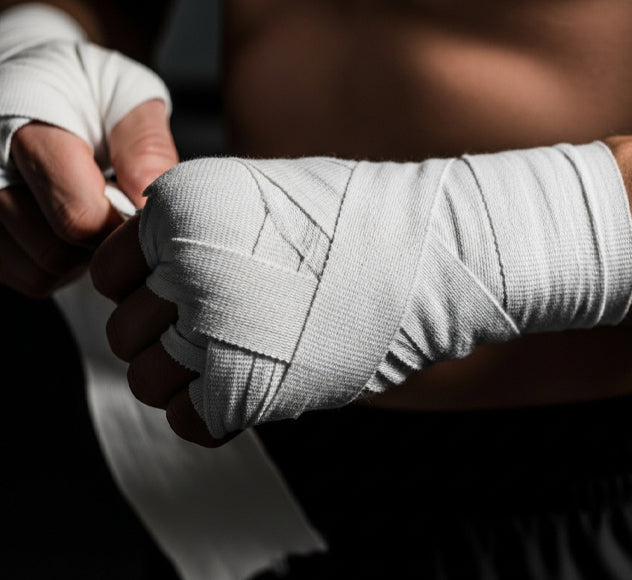
Hand wraps go on before anything else. They stabilise the wrist and compress the hand's small bones against the repeated shock of blocking punches. Skipping wraps during blocking drills is how wrist injuries begin.
Quick wraps are a practical alternative for fighters who train frequently and want fast, consistent wrist support between sessions. They slide on quickly over the hand and provide reliable protection without the time investment of traditional wrapping.
Sparring gloves are purpose-built for live partner work. Their additional padding protects both fighters during the contact drills, where blocking timing is actually developed. Proper sparring gloves let you absorb accidental flush shots without absorbing the kind of damage that affects long-term health.
Headgear extends how much sparring you can do safely. The shots that slip through during blocking practice are unavoidable in the learning phase. Quality headgear from Sting Sport absorbs those impacts and keeps your training consistent week after week.
Protection gears, including mouthguards and body protectors, complete the setup. Body shots are a critical part of blocking training, and full protection gear allows your training partner to work the body at realistic intensity without either fighter holding back.
Conclusion
How to block punches is not a passive skill. It is the intelligent, active layer of boxing that separates fighters who last from those who get worn down early. Every technique in this guide, from the basic high guard to the shoulder roll, serves the same purpose: absorb less, counter more, and stay sharper for longer. The foundation is built through repetition, and repetition requires the right equipment to train safely and consistently. Gear up with Sting Sport's full range of professional boxing protection at Sting Sports and build the kind of defense that makes your how to block punches in boxing training count every single session.
FAQs
Q1. What is the most important technique for blocking a punch?
The high guard is the most fundamental technique. It protects the head and face while keeping both hands positioned to counter the moment the attack is absorbed.
Q2. How do I block a hook in boxing?
Raise your elbow on the same side as the incoming hook to approximately 90 degrees and lean your head slightly to the opposite side. The elbow and shoulder absorb the punch rather than your glove.
Q3. Is blocking a punch better than slipping it?
Slipping avoids damage entirely while blocking absorbs it. Slipping is the better outcome, but blocking is the more reliable response when you cannot predict the exact path of an incoming punch.
Q4. How do I block body shots in boxing?
Drop your elbow on the threatened side toward your hip, lean into the punch, and exhale sharply as contact is made. Always keep your opposite hand at head level to guard against a follow-up hook.
Q5. What gear do I need to train blocking punches safely?
You need boxing gloves, hand wraps or quick wraps, sparring gloves, headgear, and full protection gear. Each item protects a different area during the live contact work, where blocking skills are actually developed.