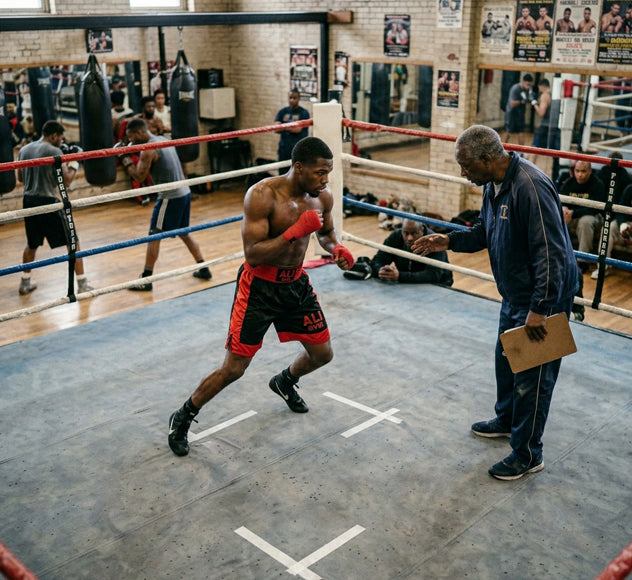

Have you ever thought about why professional boxers move around the ring like their feet don’t touch the ground but are always well-balanced? The reason behind all that lies in proper boxing footwork. Boxing footwork techniques are the cornerstone of any punches, defensive techniques, and maneuvers. No matter if you are entering the ring for the very first time or exercising for physical fitness purposes, learning boxing footwork for beginners changes everything dramatically. As recent research suggests, footwork can improve boxers’ speed by 30% and decrease the likelihood of sustaining an injury dramatically. Moreover, boxers with good footwork have proven to show 40% better control over the ring during fights.
What Is Boxing Footwork and Why It Matters
"Boxing footwork" denotes specific methods of placing and moving the feet for balancing, mobility, and punching. While staying static does not involve the proper application of footwork, proper footwork results in effective power transfer, as each muscle in the body can play its role. The common mistake among beginners is ignoring footwork in favor of punches.
The key element of proper footwork is a good stance. Feet must be shoulder-width apart, with the back leg being the dominant one. All the weight must be placed on the balls of the feet. This allows for fast changes in direction and great pushing strength. Proper distancing is greatly facilitated by footwork.
Professional boxers dedicate 40 percent of their training efforts on honing their footwork. The efforts pay off because great footwork makes it possible to punch effectively without becoming vulnerable to any incoming punches. All the great boxers like Muhammad Ali and Floyd Mayweather Jr. relied on great footwork techniques.
Boxing Movement Fundamentals
Master these four core boxing movement patterns to build a solid foundation:
The Forward Step: Push back with your back foot and advance with your front foot. Raise your hands and keep a distance between yourself and your opponent. The stepping forward technique helps you create distance when attacking as well as put pressure on your opponent. Try advancing at varying speeds.
The Backward Step: Step back with your rear foot and then move your front foot back as well. By doing this, you are creating space and escaping from any attack that is directed at you. Remember not to cross your feet when stepping backwards.
Lateral Movement: Shift your lead foot to the side and your rear foot should follow. This will allow you to form angles when throwing your punches and also help you evade the blows from the opponent. The lateral movement plays an essential role in boxing in terms of controlling the ring and slipping punches.
The Pivot: Rotate your feet around your lead leg to reposition your body. Pivoting helps you slide off center and avoid punches while setting up counter-attacks. This advanced technique requires practice but becomes invaluable as your skills develop.
Essential Boxing Drills for Footwork Mastery
Effective boxing drills build muscle memory and improve footwork consistency. Practice these four drills for 15 minutes daily to accelerate your development:
Ladder Drills: Make use of an agility ladder to improve foot speed and coordination. Move quickly on the ladder using very fast foot movements. This training significantly increases reaction time and enhances your footwork skills. Practice ladder exercises thrice weekly for maximum benefit.
Shadow Boxing Footwork: Without an opponent, engage in shadow boxing drills with forward, backward, and sideways foot movements for three rounds. Ensure that your hands remain up while performing this exercise.
Ring Control Exercises: Walk in square formations around your gym, ensuring that you always maintain correct boxing posture. Increase the speed of your foot movements as your skills improve in this regard.
Cone Weaving Drills: Set up cones in a line and weave between them while maintaining proper boxing stance. This drill develops agility and footwork precision while simulating fight conditions.
Boxing Footwork Techniques Comparison
|
Footwork Technique |
Purpose |
Difficulty Level |
Benefits |
Practice Duration |
|
Forward Step |
Close distance and apply pressure |
Beginner |
Improves approach control |
5-10 minutes |
|
Backward Step |
Create distance and escape |
Beginner |
Develops defensive skills |
5-10 minutes |
|
Lateral Movement |
Create angles and avoid punches |
Intermediate |
Enhances ring control |
10-15 minutes |
|
Pivot |
Reposition and counter-attack |
Intermediate |
Builds advanced footwork |
10-15 minutes |
|
Cross-Step |
Generate power and momentum |
Advanced |
Increases punching power |
15-20 minutes |
|
Circle Movement |
Maintain ring control |
Advanced |
Develops superior positioning |
15-20 minutes |
Achieving Ring Control
Control of the ring involves having control over the space when fighting. Proper footwork will give you that upper hand in controlling the space. You have to position yourself in the middle of the ring for control of space and for your opponent to be forced to move toward the ropes.
Boxing footwork should be practiced in connection with your punches. Whenever you execute a jab-cross combination, follow up with a backward movement to reset yourself and avoid any attack from your opponent. Great boxing movement coupled with effective punching will create an effective attack. Learn more about boxing combinations for beginners to integrate footwork with striking techniques effectively.
Experienced boxers know that ring control determines fight outcomes. By mastering footwork, you control where the fight happens, when exchanges occur, and how your opponent responds. This strategic advantage becomes increasingly important as your boxing journey progresses.
Common Beginner Mistakes to Avoid
Beginners will tend to keep their feet flat on the ground, thereby making it difficult for them to move swiftly. Always be prepared for swift motion by keeping your feet at the ball positions. One more common error that beginners will make is to move their legs in an exaggerated fashion, which is dangerous.
Additionally, neglecting footwork during practice is a critical error. Explore boxing footwork drills designed for beginners to build consistent technique and avoid these common pitfalls. Good equipment also matters significantly. Proper boxing shoes provide ankle support and traction for better footwork development. Investing in quality gear accelerates your progress and prevents injuries.
Practice Tips for Rapid Improvement
Progress should be slow and concentrate more on technique than speed. Consistency is better than intensity when learning a new skill. Spend 15 minutes working on your footwork before starting every workout session. Film yourself and notice any patterns in your moves. Above all else, be patient. Good boxing footwork takes time to perfect.
Always try to train with a coach to avoid developing bad habits. Bad habits that are formed while training alone can be hard to fix in the future. Aim to train at least thrice per week for progress to show. Increase intensity gradually with increased confidence. Remember that good footwork is the key to all boxing skills.
Conclusion
Learning the basics of boxing footwork requires time and commitment; however, the outcomes are astounding once you perfect them. Proper foot positioning enhances your strength, defense, and control in the ring. You should begin by mastering the proper stance, then move on to learning the basic movements, and perform various exercises regularly.
Ready to take your training to the next level? Check out our sparring tips for beginners to apply your new footwork skills safely in controlled environments. Visit our boxing equipment collection to find quality gloves and gear that support your training journey. Start your footwork transformation today and experience the difference proper boxing movement makes in your training and confidence.
Frequently Asked Questions
Q1: How often should beginners practice boxing footwork?
Practice the boxing footwork every day if you can. Spend 15 minutes doing footwork practice exercises before your regular workouts. It is more important to be consistent than to have a long workout period when it comes to learning proper boxing footwork.
Q2: What's the best way to improve ring control?
Build ring control through footwork practice and strategic positioning. Study how experienced boxers cut off angles and apply pressure. Watch professional matches and learn how to read your opponent in boxing to understand tactical positioning. Practice cone-weaving drills to develop the footwork needed for superior ring control.
Q3: Can I learn boxing footwork alone, or do I need a coach?
Footwork exercises for boxing may be performed solo with shadow-boxing and ladder exercises. But a good coach gives you important feedback about your stance and footwork. Either way works well. Mixing both methods speeds up the process immensely.
Q4: What shoes should I wear for boxing footwork training?
Get yourself some specialized boxing shoes that will help you learn footwork exercises better. They give support to ankles, have better traction, and facilitate side-to-side movements easily.