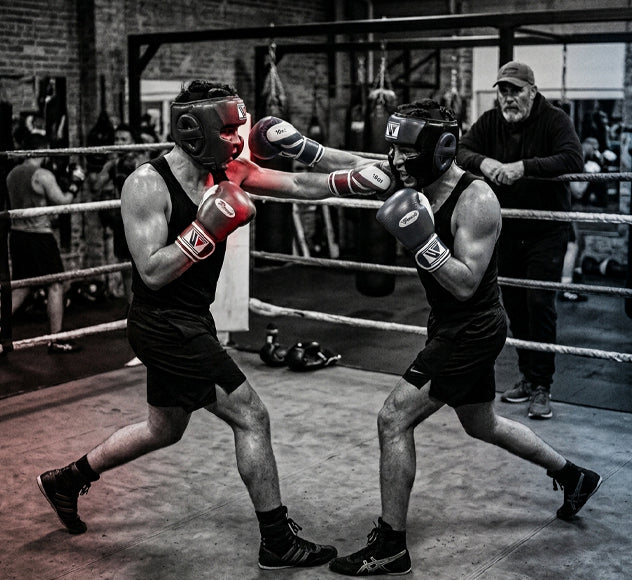

Every boxer wants to hit harder, and punching power is what all boxers want to continuously improve. But most training programs chase punching power through the wrong methods, focusing on arm strength when the real force chain starts at the feet, travels through the legs and hips, and transfers through the core before the fist ever moves. Punch power is a combination of several factors, including technique, strength, speed, and timing. To deliver a powerful punch, you need to optimize each of these elements working together. In this guide, we will detail why punching speed is important in boxing, what the science behind punching power is, and what the best punching power exercises are that can produce harder hits.
What Is Punching Power?
Punching power is not simply how strong your arms are. It is the total force your body can generate and transfer through a punch at the moment of impact.
The desired outcomes of punch-specific training are improved hand speed, punching strength, and effective mass. Force is generated through kinetic chain sequencing from foot to fist, with forceful hip and core rotation being the primary driver of power.
Two boxers of identical size and arm strength can produce very different punching power based entirely on how efficiently they transfer energy through their body. This is why technique is the foundation before any strength or speed work makes sense.
Why Speed and Punching Power Matter in Boxing?
One of the main goals in boxing is to beat your opponent to the punch; the key attribute a fighter requires to do this is speed. A speed advantage usually provides a highly effective path to victory over your opponent. Having impressive hand speed when throwing punches also adds a level of unpredictability that is incredibly difficult for an opponent to manage.
In boxing, it is normally the punch you do not see that knocks you out. Fast punches make it far harder for a fighter to read or anticipate your punch, whether that be a jab, straight punch, uppercut, overhand, right cross, hook, or combo. This means you have a much higher chance of landing your shots and hurting your opponent, and therefore winning the fight.
Hand speed is not the only speed that you need to be fast enough in the ring; footwork speed and upper-body movement are just as important. This will not only allow you to land the first punch, but it will also give you the ability to quickly evade any counterpunches coming back at you. Punching power without the speed and positioning to land it cleanly is only half the equation.
The Science Behind Punching Power
Kinetic Chain Sequencing
The rate of force development is producing a lot of force in a short amount of time. Kinetic chain sequencing is the ability to transfer force efficiently from the foot all the way through to the fist.
Every powerful punch begins with foot pressure into the ground. That force travels through the legs, rotates through the hips and core, transfers through the shoulder, and accelerates through the arm to the point of contact. Breaking this chain at any point reduces power significantly.
Mass and Velocity
Punch power is determined by the combination of mass and velocity. Increasing either one increases power. Increasing both simultaneously is what separates average punches from genuinely damaging ones.
This is why generating power in boxing is not purely a strength question. A faster punch from a technically correct position delivers more force than a slower punch from a stronger arm alone.
Timing and Connection
Timing is everything in boxing. The ability to read your opponent and deliver a punch at exactly the right moment multiplies the effective power of any shot beyond what raw strength or speed alone can produce. Timing and connection matter most to fighters who apply pressure continuously. The swarmer's boxing style is built entirely around landing high-volume shots at close range, making timing and punch connection central to its effectiveness.
Power Punching Technique: Where Real Force Comes From
Power punching technique is the most underworked area in most beginners' training and the highest-return investment for experienced boxers.
Hip Rotation
Rotating your torso as you punch increases the power of your strikes. The more torque you can generate by twisting your torso, the harder your punches will be.
Every cross, hook, and uppercut should originate from hip rotation. The arm follows the hip, not the other way around. If your punches feel weak, check whether your hips are rotating fully before examining anything else.
Weight Transfer
How to punch harder in boxing begins with weight transfer. On a cross, your rear foot pivots as your weight shifts forward. On a jab, your lead foot steps into the punch. A stationary punch with no weight transfer is a fraction of the power available. Weight transfer is what separates a punch that staggers an opponent from one that simply lands. Understanding knockout punches in boxing shows exactly how weight, placement, and timing combine to produce finishing power.
The Rear Foot Pivot
Jump squats help build explosive power in the glutes, thighs, and lower back. Power starts from the ground up, so maintaining a solid base and using your legs to drive punches is essential for maximum force generation.
The rear foot pivot is the visible evidence of correct hip rotation. If your rear heel stays flat on the ground during a cross, you are leaving significant punching power unused.
Relaxed Until Impact
Tense muscles move slowly. A tense arm throughout the punch motion slows the fist down and reduces impact force. Stay relaxed through the delivery and snap the fist at the moment of contact. The tension should exist only at the point of impact. Wearing the right boxing gloves during technique drills matters more than most beginners realise. Glove weight affects how your hands move and how your wrists are supported during high-repetition power work.
Punching Power Exercises to Build Strength
Below are the punching power exercises that train the specific muscle groups and movement patterns for harder hits.
1. Medicine Ball Rotational Throws
Medicine ball throws are an amazing exercise for getting a strong punch. This rotation strength training is a way that fighters can work their whole body and help them shift more of their body weight into their punches. Hold a heavy medicine ball at chest level and rotate explosively before throwing the ball against the wall. Chest passes using a moderately heavy medicine ball with three sets of 10 to 15 throws against a wall develop the power that transfers directly into punch force.
2. Heavy Bag Work
One of the traditional ways of increasing the punching power you generate is through repeated rounds of the heavy bag workout. While science has shown that more isometric and targeted strength can improve your punching force, the benefits of a heavy bag can not be overlooked. Throwing punches is much different once boxing gloves and the resistance of punching bags come into play. To build punching power on a heavy bag, focus on throwing controlled combinations with proper hip rotation and full extension.
3. Explosive Push-Ups
Clap push-ups are explosive push-ups that help build power. Aim for three sets of six to ten reps, focusing on the explosive launch and soft landing. Diamond push-ups target the triceps and inner chest with three sets of eight to twelve reps.
4. Landmine Punches
The landmine punch is the main exercise used at Boxing Science to improve punching power. It develops hand speed, strength, and effective mass while training the kinetic chain sequencing required for powerful punching action.
5. Plank Variations
Core stability through planks, side planks, and planks with leg raises builds the foundation that transfers lower body power through to the fist. A strong core provides stability and generates force from the lower body through the arms.
How to Generate Power in Boxing Through Speed
How to generate power in boxing is inseparable from hand speed. A faster punch with correct technique delivers more force than a slower one, regardless of strength.
Shadow Boxing for Speed
Shadow boxing is an effective way to improve technique and execution, leading to increased punching power. It allows you to work on many aspects of boxing, including technique, footwork, head movement, and the rotational mechanics that drive power.
Focus on snapping punches back to the guard position immediately after delivery. The snap generates impact force, and the rapid return keeps the kinetic chain tight.
Speed Bag and Reflex Work
Speed bag training develops rhythm, hand-eye coordination, and the shoulder endurance needed to maintain punching power across multiple rounds. Fast hands that gas out in round two are not an asset. Shoulder conditioning keeps speed available throughout a full session.
Plyometric Leg Work
Jump squats build explosive power in the glutes, thighs, and lower back. Overhead medicine ball throws develop the explosive whole-body coordination that translates into more powerful punches.
The legs initiate the power chain. Stronger, more explosive legs mean more punching power regardless of upper body development.
Boxing Strength Training for Harder Hits
Boxing strength training for punching power focuses on rate of force development rather than maximum strength. A boxer who can produce force quickly is more powerful than one who can simply lift more weight.
Squats and Deadlifts
Squats and deadlifts are the most effective exercises to improve the rate of force development. They require generating the most force in a short amount of time with a higher external load, which builds the explosive capacity that transfers into punching power.
Compound Movements First
Focus on compound exercises like deadlifts, squats, and bench presses as the foundation of boxing strength training. These develop the explosive force needed for powerful punching across the entire kinetic chain.
Resistance Band Punching
Attaching resistance bands to a fixed point and throwing punches against the resistance overloads the specific muscles used in punching without changing the movement pattern. This is one of the most transferable boxing strength training tools available because it trains strength in the exact motion that produces punching power.
How to Punch Harder in Boxing: Common Mistakes
Arm Punching: Throwing punches using only arm strength without engaging the legs, hips, and core produces a fraction of available punching power. If your shoulder and tricep fatigue before your legs and core do, you are arm punching.
Telegraphing Power Shots: Winding up before a power punch gives opponents the time to move or counter. How to punch harder in boxing includes making power shots look identical to jabs until the last possible moment.
Ignoring the Core: Your core muscles are the powerhouse behind your punches. Incorporate exercises that target your core, such as planks, Russian twists, and medicine ball throws. A strong core provides stability and helps generate more force from your lower body through your arms.
Overtraining Arm Muscles: Bicep curls do not build punching power. The muscles that matter most are the hips, glutes, core, and the fast-twitch fibres activated through explosive compound movements. Prioritize those over isolated arm exercises.
Punching Power: Key Factors at a Glance
|
Factor |
What It Affects |
How to Train It |
|
Hip Rotation |
Primary power source |
Medicine ball throws, rotational drills |
|
Leg Drive |
Initiates the kinetic chain |
Squats, deadlifts, jump squats |
|
Core Stability |
Transfers lower-body force |
Planks, Russian twists, landmine punches |
|
Hand Speed |
Multiplies the impact force |
Shadow boxing, speed bag, plyometrics |
|
Weight Transfer |
Adds mass to the punch |
Footwork drills, technique work |
|
Timing |
Maximizes effective power |
Sparring, pad work, and reflex training |
Conclusion
Punching power is not a gift. It is an ability that can be achieved through proper techniques, consistent training, and dedication. Incorporate punching power exercises into your training regimen, and you’ll begin to notice more strength and confidence behind your every strike.
Sting Sports builds gear for fighters serious about every dimension of their development. Whether you are drilling a technique or building strength, the right equipment supports every session. Get to work.
FAQs
Q1. What is punching power in boxing?
Punching power in boxing is the total kinetic force generated and transferred through a punch at the moment of impact. It requires proper technique, hip rotation, leg drive, strength, hand speed, and timing.
Q2. How do I increase punching power?
How to increase punching power starts with technique, specifically hip rotation and weight transfer. From there, punching power exercises like medicine ball throws, explosive push-ups, squats, and deadlifts build the physical capacity to generate and transfer more force.
Q3. What are the best punching power exercises?
Some of the best punching power exercises are landmine punches, medicine ball rotational throws, explosive push-ups, squats, deadlifts, and resistance band punching.
Q4. Does boxing strength training make you punch harder?
Yes, but only when boxing strength training focuses on rate of force development and explosive compound movements rather than maximum strength or just arm exercises.
Q5. Can technique alone improve punching power?
Yes. A good power punching technique corrects hip rotation, weight transfer, and rear foot pivot. These techniques can increase force output without any strength gains.