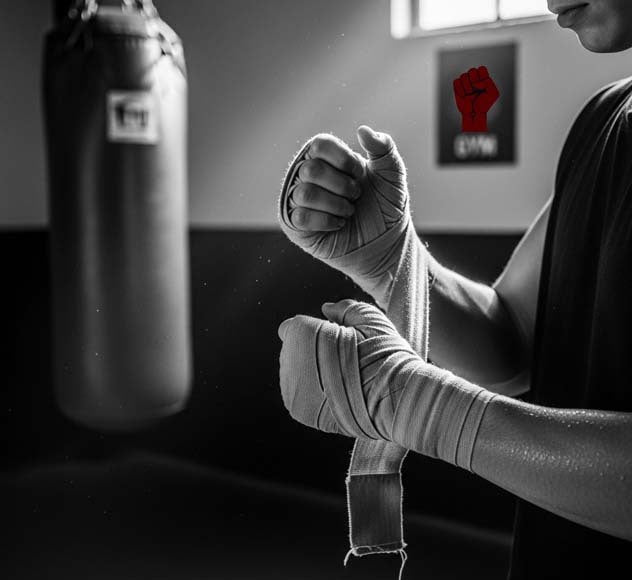

"Great fighters don't come from fighting alone; great fighters are made through training." This summarizes the idea behind the popularity and employment of the heavy bag workouts in boxing. From the earliest bare-knuckle boxing gyms through to the ultra-modern performance centers of today, the combat sports athlete has traditionally employed the heavy bag to hone their craft without the necessity of a partner. The beauty of the heavy bag is in its versatility.
Research carried out on conditioning in combat sports revealed that repetitive striking within resistance was deemed an effective technique for muscular endurance and endurance in striking. This well-disciplined workout allows boxers to train in an individual setting while being disciplined and focused. Whether you are skilled enough in the art of fighting or not, the art of fighting on the heavy bag allows you to become a better fighter and build confidence in yourself.
What is a Heavy Bag Workout?
A heavy bag workout is a boxing-focused training session using a heavy bag to develop your striking skills, movement, and conditioning. Unlike shadowboxing, the bag provides some resistance, so you can feel the impact and work on your power transfer.
A good heavy bag workout usually includes:
-
Punch combinations
-
Footwork and angles
-
Defensive movements
-
Timed rounds to really get your heart rate up
Makes it one of the most efficient tools for improving your skills and fitness in boxing. Moreover, for a deeper breakdown of how heavy bag sessions build strength, speed, and stamina together, check out The Ultimate Punching Bag Workout: Build Strength, Speed, and Stamina.
Why Heavy Bag Training Matters for Boxers
Heavy bag training lets boxers put their technique into practice and do it with real intent. You can throw punches like you mean it while still keeping control and balance.
Some of the key benefits include:
-
Improved punching power and accuracy
-
Better cardiovascular endurance
-
Enhanced coordination and rhythm
-
Stronger defensive habits
To support these gains, many boxers combine heavy bag training with resistance-based exercises, which is why tools highlighted in 7 Top Strength Training Equipment For Workout pair well with a structured boxing routine.
When Should You Do Heavy Bag Workouts?
Heavy bag exercises can fit into almost any form of training.
You can use heavy bag workouts for the following:
-
After technical drills to apply skills
-
As a conditioning-based session
-
During fight camps, when building up to intensity
-
On solo training days
Accordingly, beginners find it good to go for 2-3 sessions in a week, while experienced boxers may train up to 5 times every week on a heavy bag, adjusted in volume and recovery.
How to Structure a Boxing Bag Workout
A structured boxing bag workout is the key between training with purpose and just throwing mindless punches.
Warm-Up (10 minutes)
Jumping Rope Lightly, Dynamic Stretching, Shadow Boxing
Main Rounds (3 to 6 rounds)
Every turn has a specific theme to it, whether it is power, defense, or endurance.
Active Rest
Movement or light footwork between rounds
Cool Down
The stretching and breathing exercises relaxed me. This format will keep your heavy bag workouts safe and efficient, and actually enjoyable.
6 Heavy Bag Drills for Boxers of All Levels
1. Basic Combination Drill
This drill is all about building rhythm, balance, and clean technique.
Throw some punches:
-
Jab
-
Cross
-
Left hook
-
Reset and move
Pay special attention to getting your hands back to guard after every punch. This drill is perfect for beginners trying to get a consistent swing on things.
If you’re still mastering the fundamentals behind these strikes, reviewing Top 5 Boxing Punches You Need to Know: Techniques, Combos, and More can help refine your form and timing.
2. Power Punch Drill
Power comes from proper mechanics, not from brute force.
Throw a single punch with intention:
-
Rear Hand Crosses
-
Body Hooks
-
Cross hook combinations
Pause momentarily between punches to reset your position and breathing. This is a boxing bag workout drill to develop powerful punches.
3. Defensive Movement Drill
Defense is often ignored on the bag, but it should be trained consistently.
Punch sequence:
-
Jab-cross
-
Slip
-
Roll
-
Counter
This drill reinforces head movement and counterpunching during heavy bag training.
4. Body Shot Focus Drill
Body punches weaken opponents and enhance strategies in a fight.
Target combinations such as:
-
Left hook to the body
-
Right hand to the head
-
Double hooks
Keeping your knees bent and your abdominal muscles tightened will help you through your workout with a heavy punching bag, especially with body shots.
5. Endurance Round Drill
This drill is an effective way to attain fight readiness.
Set:
-
3-minute rounds
-
Continuous Light Combinations
-
Constant footwork
The goal is to have a controlled output without stopping. This is a workout with a heavy bag.
6. Advanced Combination Flow Drill
This drill should be conducted with seasoned boxers.
Focus on:
-
Freestyle Combinations
-
Angle Changes and Pivots
-
Visualizing An Opponent
Instead, a reaction occurs to combinations that the imagination creates. This exercise transforms the exercise with the heavy bag into a simulated fight.
Common Mistakes to Avoid During Heavy Bag Training
Even experienced boxers can stall their progress by making too many of the following mistakes:
-
Standing still without footwork
-
Dropping of hands after punching
-
Working Independently of Defensive Motion
-
Training without timed rounds
The effectiveness of heavy bag workouts is greatly increased through correcting these habits.
Final Thoughts
Starting a structured heavy bag workout program is one of the best ways to become a better boxing athlete at any level of expertise, whether that's a beginner or an experienced boxer looking to improve. A good, structured heavy bag workout will help develop better technique through proper movements while making for more efficient strokes and stroke combinations during each workout, giving you more out of each workout and becoming an excellent boxer overall.
Are you ready to take your sessions to the next level? Check out Sting Sports so you can take that next step confidently.
FAQs About Heavy Bag Workout
Is a heavy bag workout suitable for beginners?
Yes, a heavy bag workout is ideal for beginners when focused on light power, correct form, and simple combinations.
How long should a heavy bag workout last?
A heavy bag workout usually lasts between 30 and 60 minutes, depending on fitness level and training goals.
Can heavy bag workouts replace sparring?
Heavy bag workouts are excellent for conditioning and technique, but they should complement sparring rather than replace it entirely.
How often should I do a heavy bag workout?
Most boxers benefit from 3 to 5 heavy bag workout sessions per week, adjusted for recovery and intensity.